Most medical device companies treat GMP as something that kicks in once the production line starts running. But data from FDA warning letters and recalls tells a different story: quality failures almost always trace back to decisions made during product design, supplier selection, process planning, and design transfer.
This article breaks down what good manufacturing practice CGMP really means for medical devices, where the requirements come from, and how to build compliance into every stage rather than scrambling to fix gaps before an inspection.
Key Takeaways
- Current good manufacturing practice for medical devices starts long before production. Quality failures frequently originate in design controls, supplier selection, process validation, and design transfer.
- FDA’s CGMP framework for devices is defined mainly in 21 CFR part 820 (now transitioning to the QMSR) and is enforced via routine and for-cause FDA inspections.
- Integrating design and development, manufacturing controls, documentation, and post-market surveillance is essential to consistent production of safe, effective medical devices.
- Common CGMP violations like inadequate process validation or poor document controls lead to warning letters, product recalls, delayed FDA approval decisions, and multimillion-dollar remediation costs.
- An integrated MedTech partner can support GMP readiness across design, manufacturing, quality assurance, and lifecycle management.
Why GMP for Medical Devices Starts Before Manufacturing
Many OEMs approach GMP compliance as a factory-floor issue. But look at FDA enforcement data from FY 2025: design control failures appeared in 26 of 54 medical device warning letters, and corrective and preventive actions deficiencies accounted for roughly 12.4% of all Form 483 observations. These aren’t manufacturing problems. They’re decisions made-or not made-during the development process.
Consider a diagnostic analyzer project where inadequate design inputs missed sterilization and cybersecurity requirements. That oversight doesn’t surface until process validation, when the team discovers the enclosure can’t support the thermal profiles needed for sterilization, and the firmware lacks authentication controls. The result: major rework, delayed FDA clearance, and costs that dwarf the original design budget. GMP emphasizes building quality into every stage of the product lifecycle.
Product design, software architecture, usability engineering, and risk management under ISO 14971 directly influence manufacturability, process controls, and complaint trends downstream. Compliance with GMP involves strict controls for design and production processes, not just final inspection. Treating GMP as a lifecycle discipline-from concept to post-market-reduces late defects, audit findings, and expensive redesigns. Partners like Syrma Johari MedTech integrate design, manufacturing, and regulatory thinking precisely to avoid these costly disconnects.

What “Current Good Manufacturing Practice” Means for Medical Devices
In the device context, current good manufacturing practice refers to the FDA’s baseline expectations for methods, manufacturing facilities, and controls that ensure the consistent production of safe, effective medical devices. The word “current” matters: medical device manufacturers are expected to keep pace with modern technologies, data integrity practices, and risk-based quality management-from electronic batch records to validated software tools.
CGMP is fundamentally process-oriented. It focuses on how devices are designed, built, tested, and documented-not just whether a finished lot passes a final test. Testing alone cannot “inspect in quality.” GMP ensures medical devices meet safety and effectiveness standards by requiring quality to be built into design and production processes. GMP ensures the safety of patients and users, and GMP promotes product effectiveness and reliable results.
CGMP compliance is mandatory for all medical device manufacturers in the U.S.
Regulatory Framework: 21 CFR Part 820, QMSR, and Related Federal Regulations
The federal regulations governing medical device CGMP center on FDA’s 21 CFR Part 820, which outlines regulations for medical device manufacturers, covering everything from management responsibility to design controls to production and process controls.
As of February 2, 2026, the FDA’s Quality Management System Regulation incorporates ISO 13485:2016, published in the federal register as the final rule on February 2, 2024. The quality management system regulation amends Part 820 to align U.S. device CGMPs with global quality standards while preserving FDA-specific CGMP requirements such as MDR reporting and UDI.
ISO 13485:2016 is a key quality management standard for medical devices, but certification alone does not replace CGMP compliance or FDA inspections. Many firms are cited despite holding valid ISO certificates.
CGMP expectations also surface directly in regulatory submissions: 510(k), PMA, and De Novo filings require evidence of manufacturing processes, process validation, sterilization, and design controls. GMP compliance is mandatory for FDA regulatory submissions.
For international markets, EU MDR classifies devices into Class I, IIa, IIb, and III, while FDA classifies medical devices into Class I, II, or III. GMP classification helps ensure appropriate regulatory oversight in each jurisdiction. MDSAP certification allows compliance with multiple international regulations-covering FDA, Health Canada, TGA, and more-through a single audit framework, and GMP compliance facilitates international trade for medical devices.
Core CGMP Requirements for Medical Devices
The major CGMP regulations under 21 CFR Part 820 form a formal system covering these elements:
- Management Responsibility: Quality policy, resource allocation, management reviews.
- Design Controls: Planning, inputs, outputs, verification, validation, design transfer, and changes.
- Document Controls: Procedures for approval, distribution, and revision of quality system documents.
- Purchasing Controls: Supplier evaluation, qualification, and monitoring.
- Production and Process Controls: Documented manufacturing instructions, validated special processes, in-process inspection.
- CAPA: Investigating product quality deviations, identifying root causes, and implementing corrective and preventive actions.
- Recordkeeping: Device Master Records, Device History Records, complaint files, training records.
GMP includes training requirements for personnel involved in medical device production, and GMP enhances traceability and accountability in manufacturing. GMP helps prevent contamination and mix-ups in production through controlled procedures and standard operating procedures.
These requirements are now being harmonized with ISO 13485 under the QMSR, reducing duplication for global medical device manufacturers. Gaps in any subsystem often appear as FDA 483 observations and, in serious cases, lead to warning letters.
Design Controls: Where GMP for Medical Devices Really Begins
Design controls were introduced after major device failures in the early 1990s, driven by the Safe Medical Devices Act. They remain a central pillar of CGMP for medium- and high-risk devices, including all class iii products.
The design and development steps include planning, defining design inputs (safety, performance, intended use, regulatory requirements), producing design outputs, verification, validation (including rigorous testing under actual or simulated use conditions), design reviews, design transfer, and managing design changes. Higher-class devices require more rigorous testing and documentation throughout these steps.
Incomplete or ambiguous design inputs-such as missing cybersecurity or usability requirements-later cause manufacturing deviations, nonconformances, and CGMP violations. GMP compliance involves maintaining auditable records for each development stage, typically captured in the design history file (DHF), which FDA investigators review during inspections and which must trace to regulatory submissions.
For a deeper look at how integrated engineering supports design controls, see how design and engineering services can embed risk management and regulatory strategy from day one.
From Design Transfer to Consistent Production: Process and Production Controls
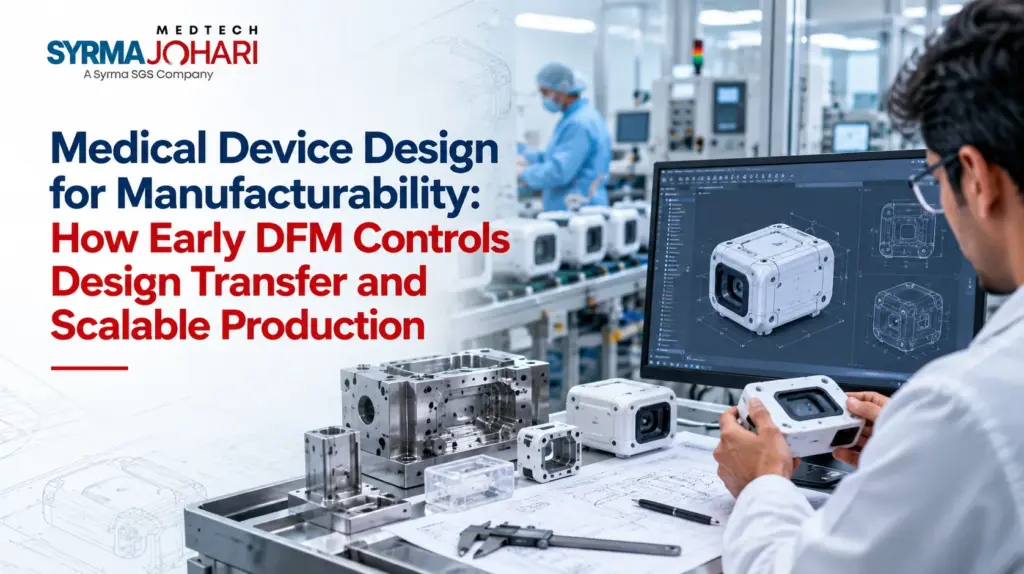
Design transfer is where design specifications become manufacturing instructions, test methods, and quality controls. Failure here is among the most common sources of CGMP citations-ambiguous production processes, missing test methods, or inability to replicate lab performance in real manufacturing operations.
Production and process controls under CGMP require:
- Documented manufacturing instructions for each production step
- Validated special processes (sterilization, bonding, software-driven automated assembly)
- In-process inspection criteria tied to design outputs
Process validation follows installation qualification (IQ), operational qualification (OQ), and performance qualification (PQ) to demonstrate that manufacturing equipment and processes reliably produce devices meeting specifications.
Consider infusion pumps: inadequate OQ/PQ on solder-reflow profiles can cause intermittent field failures, which can trigger an FDA-mandated recall. The Ivenix large volume infusion pump was recalled due to software anomalies that could lead to underdosage-underscoring how both hardware and software validation gaps drive product quality deviations.
Robust contract manufacturing services implement systematic design transfer and validation to prevent exactly these outcomes.
Supplier Management and Incoming Quality Under CGMP
Purchasing controls are a formal CGMP requirement. Medical device companies must evaluate, qualify, and monitor suppliers whose raw materials or services affect device quality. This includes risk-based supplier qualification through audits, capability assessments, and historical performance review for high-risk components like PCBs, sterile disposables, or embedded software.
Incoming inspection and material controls-certificates of analysis, sampling plans, and lot-level traceability-prevent nonconforming materials from entering production processes. Recent inspection trends show FDA focusing heavily on outsourced processes (sterilization, contract manufacturing, software development), expecting clear regulatory oversight and quality agreements. Strengthening supplier assessment is a practical step every manufacturer should prioritize.
Regulatory authorities may inspect manufacturing facilities for GMP compliance at any time, including supplier sites involved in critical processes.
Documentation, Records, and Data Integrity in GMP Systems
The main CGMP records for devices include:
| Record | Purpose |
| Device Master Record (DMR) | Specifications, procedures, and quality controls for a finished device |
| Device History Record (DHR) | Production history for each lot/unit |
| Design History File (DHF) | Complete record of design and development decisions |
| CAPA Records | Root cause analysis, corrective/preventive actions |
| Complaint Files | Customer complaints, investigation outcomes |
| Training Records | Personnel qualification and competency evidence |
Incomplete or inconsistent documentation is one of the most frequent root causes of CGMP violations and FDA 483 observations. Data integrity expectations follow ALCOA principles: Attributable, Legible, Contemporaneous, Original, and Accurate. This applies to electronic batch records, test results, software builds, and more.
Modern quality management systems increasingly rely on validated electronic QMS platforms, though paper systems remain acceptable if they meet CGMP recordkeeping GMP requirements. GMP will focus on data integrity with digital systems as the medical device industry accelerates its digital transformation.
Quality Control, Testing, and Post-Market Feedback Loops
Quality control under CGMP spans three stages: incoming inspection, in-process testing, and final release testing-all driven by documented acceptance criteria. Trend analysis of nonconformances, scrap, and rework feeds into CAPA, driving continuous improvement and risk reduction. Continuous improvement is a key principle in maintaining GMP compliance.
Complaint handling, vigilance, and post-market surveillance data (field failures, MDRs) must loop back into risk management, design updates, and process changes. For example, in the IVD and diagnostics space, reagent stability issues identified through post-market data have led to updated control strategies and labeling changes-demonstrating how post-market feedback directly supports patient safety and product quality.
GMP promotes product effectiveness and reliable results by embedding these feedback loops into the quality system.
FDA Inspections: What CGMP Compliance Looks Like in Practice
Routine FDA inspections assess compliance with current good manufacturing practice regulations through the new Compliance Program 7382.850, which replaced QSIT with a QMSR-aligned inspection process.
Inspections are triggered by initial manufacturer registration, routine cycles (every 2–5 years depending on risk class), or for-cause events such as complaints or adverse events. GMP regulations are enforced by regulatory bodies like the FDA, and investigators review CGMP compliance by walking the process flow, sampling records, interviewing staff, and comparing standard operating procedures to actual practice.
Possible outcomes include:
- No action indicated (clean inspection)
- FDA 483 observations (documented deficiencies)
- Warning letters (formal enforcement)
- Import alerts or consent decrees (severe cases)
Regulatory agencies can shut down non-compliant manufacturing facilities. Consistent daily adherence to GMP standards-not last-minute document clean-ups-is what leads to smoother inspections.
Common CGMP Violations in Medical Devices and Their Impact
The most frequent GMP violations cited in FDA warning letters include:
- Inadequate design controls
- Lack of process validation
- Poor CAPA procedures
- Insufficient complaint handling
- Incomplete Device History Records
Non-compliance can lead to product recalls and liability. FDA can impose fines for GMP violations. Non-compliance may result in loss of market access-distributors and hospital purchasing groups often require evidence of clean inspection histories. Companies can spend an estimated $1–5 million remediating serious GMP violations, with complex multi-site issues potentially exceeding $10 million and delaying market access by 12–24 months.
Consider the HeartMate 3 Left Ventricular Assist System recall in 2024, where the implant kit was recalled due to risk of blood leakage or air entry between the cuff and cannula-pointing to weaknesses in manufacturing controls or design transfer.
Indirect impacts include loss of customer trust, distributor reluctance, increased insurance and legal costs, and reduced company valuation during fundraising. Building GMP practices into design and development early is far cheaper than post-enforcement remediation.
CGMP, ISO 13485, and Risk Management: Creating a Unified Quality System
CGMP (21 CFR Part 820/QMSR) and ISO 13485 share overlapping expectations for design controls, documentation, and production controls, but carry different legal status by jurisdiction. Under the QMSR, FDA now incorporates ISO 13485:2016 by reference, significantly narrowing the gap.
ISO 14971 risk management should be integrated throughout: hazard analysis and risk control measures must be reflected in design outputs, test methods, and process controls. A single integrated quality system that simultaneously satisfies FDA, EU MDR, and MDSAP requirements reduces audit fatigue and inconsistent procedures.
GMP compliance fosters customer confidence and facilitates market access across regions. Syrma Johari MedTech operates under ISO 13485 and MDSAP-the first Indian medical device manufacturer to achieve MDSAP certification-giving them cross-geography experience that can inform OEMs building unified quality management systems.
GMP Considerations for Software and Digital Medical Devices
CGMP requirements apply fully to software as a medical device (SaMD) and software embedded in a medical device. Design controls, configuration management, verification, and validation are non-negotiable. Version control, build environments, automated testing, and cybersecurity represent modern elements of good manufacturing practice for digital devices.
While there’s no physical “factory,” the software development lifecycle must be controlled and documented just like a manufacturing process-including change control and defect tracking. GMP will adapt to digital technologies like IoT and artificial intelligence, and additive manufacturing is gaining traction in GMP practices for prototyping and patient-specific devices. Remote auditing has increased due to the COVID-19 pandemic, adding another dimension to the inspection process for digital manufacturers.
Incomplete software validation in a remote patient monitoring system can result in incorrect alarm thresholds and trigger an FDA safety communication-a reminder that software-related quality processes demand the same rigor as hardware. Future trends point toward personalized medicine and increasingly sophisticated algorithms requiring even tighter lifecycle controls.
GMP in Diagnostics and IVD Devices
GMP requirements in in vitro diagnostics (IVD) involve control of reagents, calibrators, sample handling, and instrument–reagent compatibility. Additional complexities include lot-to-lot consistency, analytical performance verification, and environmental controls for reagent storage. IVD devices often combine electronics, optics, and consumable kits, making supplier controls and design transfer critical to GMP compliance.
Regulators increasingly scrutinize software in IVDs-including algorithms and connectivity-as part of CGMP inspections. For medical device manufacturers working in diagnostics and laboratory equipment, integrating these controls early prevents costly post-market corrections.
The Cost of Non-Compliance Versus Building GMP In from Day One
A mid-size OEM investing an estimated $300–500k in front-loaded design controls, process FMEAs, and supplier audits can potentially avoid downstream issues that might otherwise cost several million dollars and 12–18 months of delay. Sustainability will influence future GMP practices in manufacturing, making early investment even more strategic.
GMP is not a “compliance tax.” It’s an enabler of manufacturing excellence and long-term brand value. Firms that maintain product quality and achieve higher quality outcomes enjoy stronger negotiating power with investors, easier entry into new markets, and more predictable launch timelines. The GMP guidelines exist to ensure quality, and companies that embrace them early gain competitive advantage rather than just regulatory clearance.
How an Integrated MedTech Partner Can Support GMP Readiness
Partner Perspective
Working with a specialized CDMO can fundamentally strengthen CGMP compliance from concept through sustained production. Syrma Johari MedTech is a global, MedTech-only CDMO with over 45 years of experience, ISO 13485 and MDSAP certifications, and infrastructure purpose-built around GMP medical devices.
SJML integrates design and engineering, manufacturing services, and QARA support so quality is built in, not bolted on. Through product lifecycle management, SJML manages design changes, obsolescence, CAPA actions, and multi-market regulatory updates in a GMP-compliant framework.
OEMs can engage Syrma Johari MedTech at any point-from concept feasibility through design transfer and scale-up-to improve CGMP readiness and move from concept to compliant commercialization with greater confidence.
Practical Steps to Strengthen Your GMP Medical Device Program
Here’s a concise checklist for the medical device industry:
- Gap assessment: Map your existing quality system against 21 CFR Part 820/QMSR and the six QMS inspection areas.
- Update design control procedures: Ensure design inputs capture all safety, usability, cybersecurity, and regulatory requirements.
- Map risk controls into manufacturing: Translate ISO 14971 outputs into process controls, test methods, and acceptance criteria.
- Review supplier oversight: Audit critical suppliers, establish quality agreements, and risk-rank your supply base.
- Establish a cross-functional CGMP steering group spanning R&D, manufacturing, quality, regulatory, and supply chain.
- Pilot improvements on a single product line before rolling changes out site-wide-such as enhanced process validation or electronic DHRs.
For complex areas like sterilization validation, software lifecycle, or multi-jurisdiction regulatory planning, early engagement with experienced partners accelerates progress. Contact Syrma Johari MedTech to discuss GMP design, manufacturing, or QARA support tailored to your program.

Frequently Asked Questions about GMP for Medical Devices
Do I need full CGMP compliance before submitting a 510(k) or De Novo?
While FDA primarily evaluates safety and effectiveness in submissions, they increasingly expect evidence that critical manufacturing processes and design controls are defined. For higher-risk devices, process validation evidence is expected. Serious gaps often surface during pre-approval or post-approval inspections, so aligning your quality system with 21 CFR Part 820/QMSR before submission reduces FDA approval and launch risk. Early process validation planning and draft DMR/DHF content can be referenced in your submission documentation.
How do CGMP expectations differ for Class I, II, and III medical devices?
All U.S. medical device manufacturers must follow CGMP, but certain Class I devices may be exempt from some design control provisions. Most Class II and all Class III devices require full design controls, and higher-risk devices face more intensive process validation, supplier controls, and post-market surveillance. Patient health outcomes depend on appropriate regulatory oversight matching device risk.
What is the difference between GMP for drugs and CGMP for medical devices?
The high-level principles overlap-control of facilities, processes, and quality systems-but the detailed federal regulations differ. 21 CFR Parts 210/211 govern drug product manufacturing, while Part 820/QMSR covers devices. Device CGMP emphasizes design controls, usability, and hardware–software integration, while drug GMP focuses more on batch processing, sterility, and chemical controls. Manufacturers of combination products must understand and integrate both frameworks, often using FDA’s combination product guidance.
Can a contract manufacturer take responsibility for my CGMP obligations?
Legal responsibility for CGMP compliance rests with the product’s legal manufacturer, even when medical device manufacturing is outsourced. Robust quality agreements, clear division of responsibilities, and active regulatory oversight of the CMO’s quality system are essential. Partnering with an experienced MedTech-only CDMO like Syrma Johari MedTech reduces risk, but the OEM must still maintain an effective quality system and regulatory accountability.
How should startups approach CGMP when they have limited resources?
Focus first on design controls, risk management, and basic document controls. Ensure early design decisions are traceable and justifiable. Leverage experienced partners or fractional quality and regulatory experts to set up a right-sized QMS that can scale. Build a CGMP roadmap aligned with funding milestones and engage potential manufacturing partners early in the development process to avoid redesign at scale-up. GMP standards don’t require over-engineered systems-they require the right controls at the right time.