Medical device testing helps manufacturers verify device safety, performance, reliability, and compliance before products reach the market. For electronic medical device contract manufacturing companies, understanding different types of testing and phases where they should be applied is essential to identifying design and production risks, maintaining consistent quality, and meeting regulatory requirements. Testing spans the medical device lifecycle, from early prototypes and design verification to validation, production testing, and final product release. A structured testing approach ensures that each stage of development generates the evidence required to support product quality, safety, and regulatory readiness.
This guide covers the key types of medical device testing, their role at different stages of development and manufacturing, and best practices for implementing an effective testing strategy. Furthermore, it outlines the key regulatory requirements and testing standards across major markets, along with the considerations for building a risk-based strategy.
What is Medical Device Testing?
Medical device testing is a structured process that helps evaluate the safety, effectiveness, and performance of medical devices. It involves a series of tests, experiments, and evaluations that ensure medical devices meet regulatory standards and perform as intended. It also helps assess device aspects such as design, functionality, durability, sterility, biocompatibility, electrical safety, and usability.
What are the Different Medical Device Testing Types?
Medical device testing covers a range of evaluations performed to verify safety, performance, reliability, and regulatory compliance.
The testing approach varies by device type, intended use, risk profile, and stage of development.
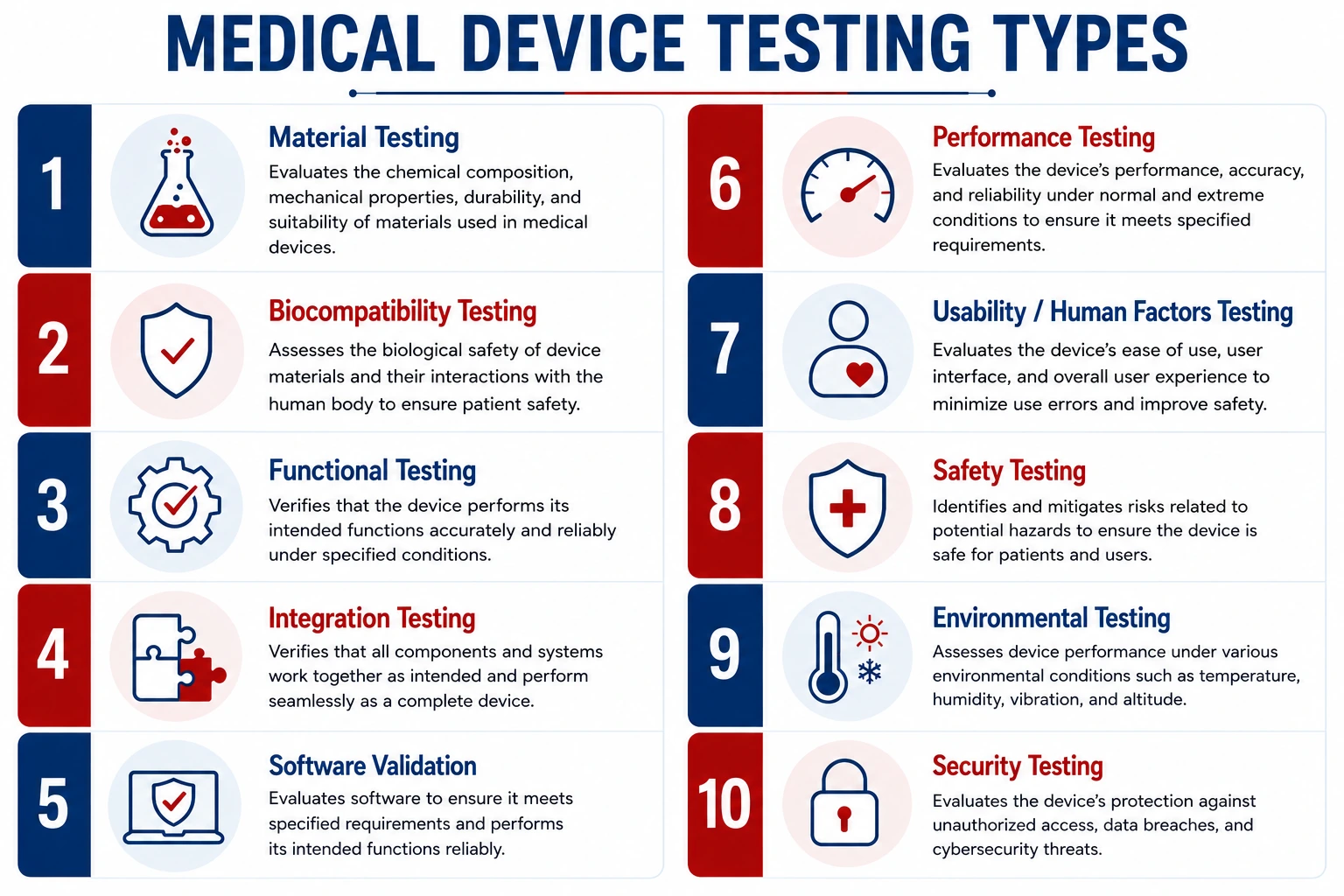
1. Material Testing
Material testing evaluates the chemical composition, mechanical properties, durability, and suitability of materials used in medical devices. These tests help verify that materials meet specified performance requirements and, where applicable, support biocompatibility assessments and regulatory requirements for patient-contacting components.
2. Biocompatibility Testing
Biocompatibility testing is a crucial aspect of ensuring the safety and compatibility of electronic medical devices with the human body. It involves assessing the device’s potential interactions with biological systems and evaluating its biologically safe performance. This case study examines the biocompatibility testing process for an electronic implantable device, specifically a cardiac pacemaker.
The cardiac pacemaker regulates and controls the heart’s electrical activity in patients with abnormal heart rhythms. As it directly interacts with bodily tissues and fluids, thorough biocompatibility testing is essential to ensure patient safety and device effectiveness.
The biocompatibility testing process involves the following steps:
- Material Selection: The first step is to select materials compatible with the human body. Materials used in the pacemaker, such as the casing, leads, and electrodes, must be non-toxic, non-allergenic, and resistant to degradation in the physiological environment.
- Cytotoxicity Testing: The pacemaker components are subjected to cytotoxicity tests to determine whether they cause harm to living cells. These tests involve exposing cell cultures to the materials and evaluating their effects on cell viability and functionality.
- Sensitization Testing: Sensitization tests assess the potential of the pacemaker materials to cause an allergic response in the human body. They involve exposing the materials to skin or mucosal tissues and monitoring any adverse reactions, such as redness, swelling, or itching.
- Irritation and Intracutaneous Reactivity Testing: These tests evaluate the potential of the pacemaker materials to cause irritation or inflammation when in contact with skin or tissues. The materials are applied to the skin or injected into the tissue, and the resulting reactions are assessed.
- Hemocompatibility Testing: Since the pacemaker interacts with blood, hemocompatibility testing is conducted to evaluate compatibility with blood components. The materials are exposed to blood samples, and parameters such as hemolysis (red blood cell damage) and coagulation are measured.
- Systemic Toxicity Testing: Systemic toxicity tests evaluate whether the pacemaker materials have any adverse effects on the entire organism. These tests involve administering the materials to animal models and observing any systemic reactions or toxic effects.
3. Functional Testing
Functional testing is a critical phase in the development of medical devices, ensuring that they perform their intended functions accurately and reliably. This type of testing involves evaluating the device’s functional aspects, including its features, interfaces, and interactions. To illustrate the process of functional testing, let’s explore a case study of a medical device.
Case Study: Functional Testing of an Aesthetic Device for Skin Rejuvenation
Background: A medical device company has developed a skin rejuvenation device combining light therapy and radiofrequency energy to stimulate collagen production, reduce wrinkles, and improve skin texture. The company seeks to verify its safety and effectiveness for intended users.
Objective: The objective is to conduct functional testing to verify the device’s performance, safety, and regulatory compliance, and to identify any functional issues, validate device efficacy, and suggest improvements.
Methodology:
1. Test Planning: The testing team reviews the device’s specifications, intended use, and requirements with the company and develops a detailed test plan covering functional tests, test scenarios, and success criteria.
2. Test Environment Setup: A controlled testing environment is prepared with the required equipment, treatment-area models, and simulated skin conditions to replicate real-world use.
3. Test scenarios: Test cases are developed to assess the device’s functionality and treatment procedures, including different energy settings and treatment durations to verify consistent, effective performance.
4. Test Execution: Testing is conducted in a controlled environment, following the manufacturer’s instructions to evaluate treatment performance, energy delivery, treatment precision, and user-interface usability.
5. Safety Evaluation: Safety features, including temperature monitoring, skin contact detection, and emergency shut-off mechanisms, are assessed to verify safe operations and prevent excessive energy delivery.
6. Performance Assessment: The team evaluates key performance metrics, including treatment effectiveness, consistency of results, and user experience. They analyze factors such as skin improvement, reduction in wrinkles, evenness of treatment coverage, and user satisfaction.
7. Error Handling and Recovery: Error-handling mechanisms are tested for appropriate responses to interruptions, system failures, and user errors, with clear instructions and recovery options.
8. Compliance with Standards: Testing is conducted in consideration with relevant regulatory standards and guidelines, such as FDA regulations for aesthetic devices or ISO 13485 requirements for medical devices.
9. Issue Reporting: Functional issues, defects, or anomalies encountered during testing are documented. The testing team logs detailed bug reports, including steps to reproduce the issues, expected behavior, and observed deviations.
10. Test Result Analysis: Test data is analyzed to identify trends and improvement areas, with performance compared against success criteria, regulatory requirements, and relevant benchmarks.
11. Reporting and Recommendations: A comprehensive test report summarizing the testing process, findings, and recommendations, highlighting performance strengths and areas for improvement is prepared.
4. Integration Testing
Integration testing evaluates how different device components, subsystems, software, sensors, and external systems work together. It is particularly important for connected medical devices and patient monitoring systems, where reliable data exchange and interoperability are essential for accurate monitoring, communication, and timely clinical decisions.
5. Software Validation and Verification
For medical devices with software components, software validation and verification (V&V) testing ensures adherence to requirements, correct operation, and reliable performance in accordance with EC 62304, the international standard for medical device software lifecycle processes.
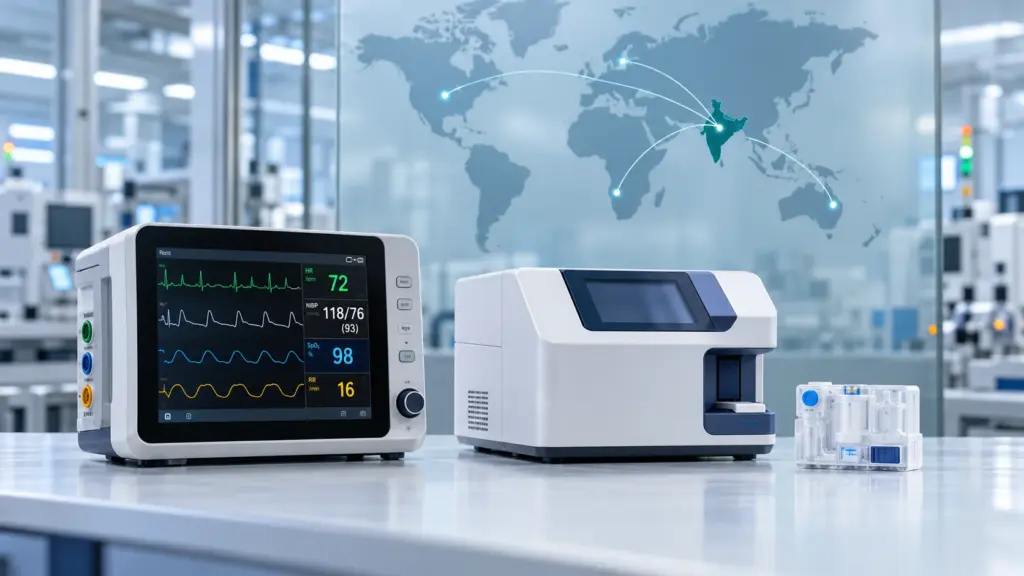
Case Study: The patient monitoring system is intended for use in hospitals and healthcare facilities. It continuously monitors vital signs such as heart rate, blood pressure, respiratory rate, and oxygen saturation levels. The software component of the device processes the sensor data, generates real-time visualizations, and triggers alarms for abnormal readings. The accuracy and reliability of the software are vital for timely intervention and patient safety.
6. Performance Testing
Performance testing of a medical device involves assessing its functionality, reliability, and effectiveness under various conditions to ensure it meets the required performance standards. It aims to identify any performance bottlenecks, limitations, or potential issues that could affect the device’s performance in real-world scenarios. Let’s explore a case study to understand how performance testing can be conducted for a medical device.
Case Study: Performance Testing of an Automated Blood Pressure Monitoring Device
Overview: In this case study, we’ll consider the performance testing of an automated blood pressure monitoring device, which is designed to measure a patient’s blood pressure accurately and provide reliable readings for medical professionals.
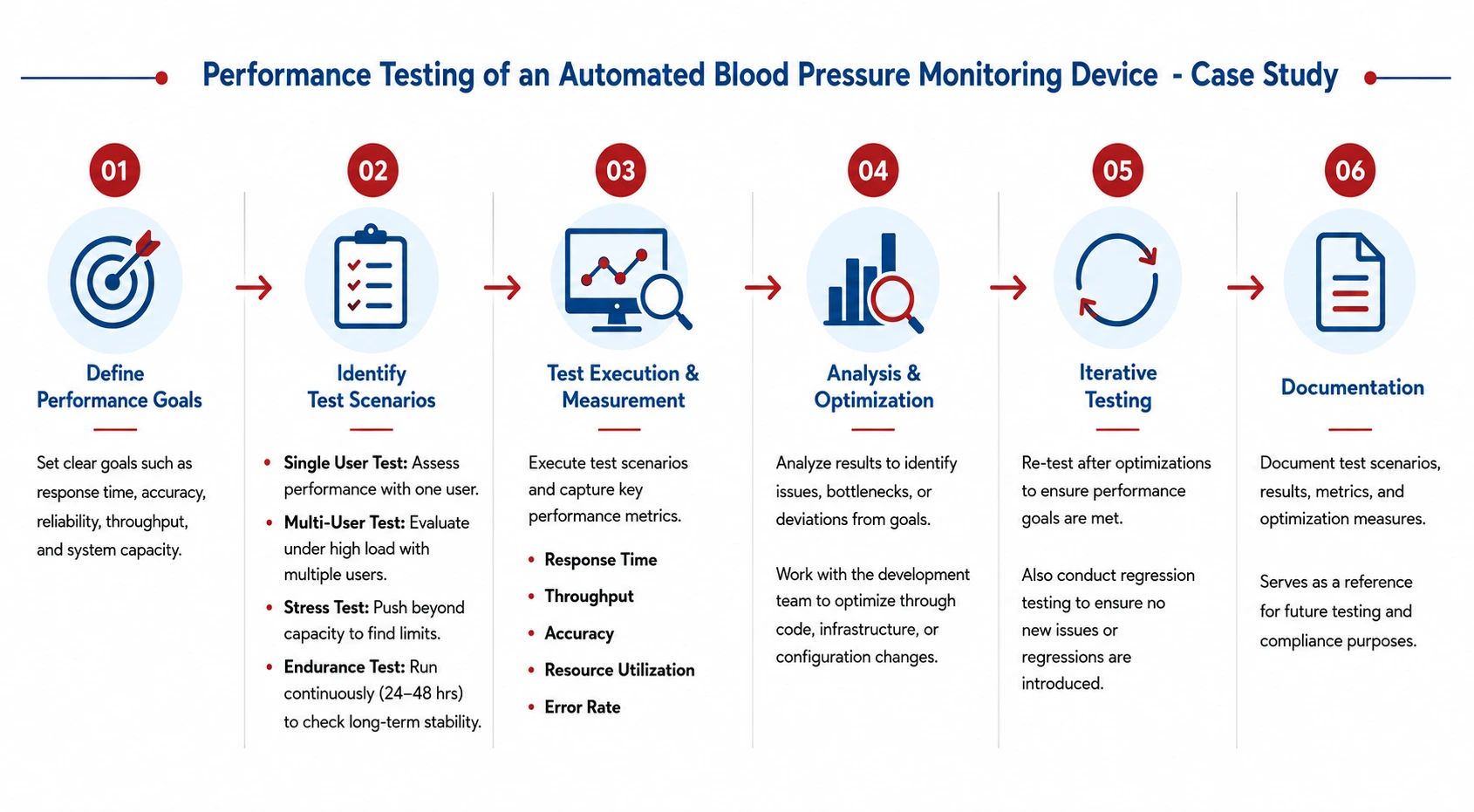
By following a systematic performance testing approach as outlined in this case study, the medical device manufacturer can ensure that their automated blood pressure monitoring device performs optimally, meets the necessary performance requirements, and delivers accurate results.
7. Usability Testing
Usability testing evaluates whether medical devices are safe, effective, and intuitive for intended users by observing interactions and gathering structured feedback.
Case Study: Usability Testing of a Diabetes Glucose Monitoring System
Background: A medical device company has developed a glucose monitoring system comprising a blood glucose meter, lancet, and mobile application. The company aims to assess usability, accuracy, and alignment with user needs.
Objective: Evaluate effectiveness, efficiency, user satisfaction, and potential usability issues.
Methodology:
- Participant Recruitment: Representative users across different age groups, diabetes types, and technology proficiency levels are recruited.
- Test Environment Setup: Controlled testing using cameras, microphones, and other observation tools are conducted.
- Test Scenarios and Tasks: Participants complete realistic tasks, such as measuring glucose, recording results, and generating reports.
- Data Collection and Observation: Record task performance, errors, difficulties, and participant feedback.
- Post-test Questionnaire: Use questionnaires such as SUS or PSSUQ to assess usability and satisfaction.
- Analysis and Reporting: Analyze findings and provide recommendations for interface design, labeling, error prevention, and instructions.
8. Safety Testing
Different regulatory bodies around the globe have an established set of rules and standards to document functional or equipment testing. Proper documentation provides traceability, demonstrates that testing has been performed as required, and it creates a record for quality, maintenance, and regulatory review. The basic requirements for IEC 62353 include:
- Identifying the testing group (outsourced organization, manufacturer, service provider, etc.)
- Identifying the person(s) who conducted the testing and evaluation
- Identifying the equipment/system (e.g., type, serial number, inventory number) and accessories tested
- Recording specific measurements and data
- Documenting the date, test type, inspection results, measurements and data obtained, final evaluation, and tester’s signature
Safety testing assesses potential risks associated with medical device use and helps verify that devices operate within defined safety limits. Depending on the device, this may include electrical, mechanical, thermal, and electromagnetic compatibility (EMC) testing. For example, safety testing of an electrotherapy device may evaluate electrical grounding, output at specified frequencies, mechanical stability, protection against unintended energy delivery, and resistance to electromagnetic interference. Together, these evaluations help demonstrate that the device can perform its intended function while maintaining appropriate safety for patients, users, and the surrounding environment.
9. Environmental Testing
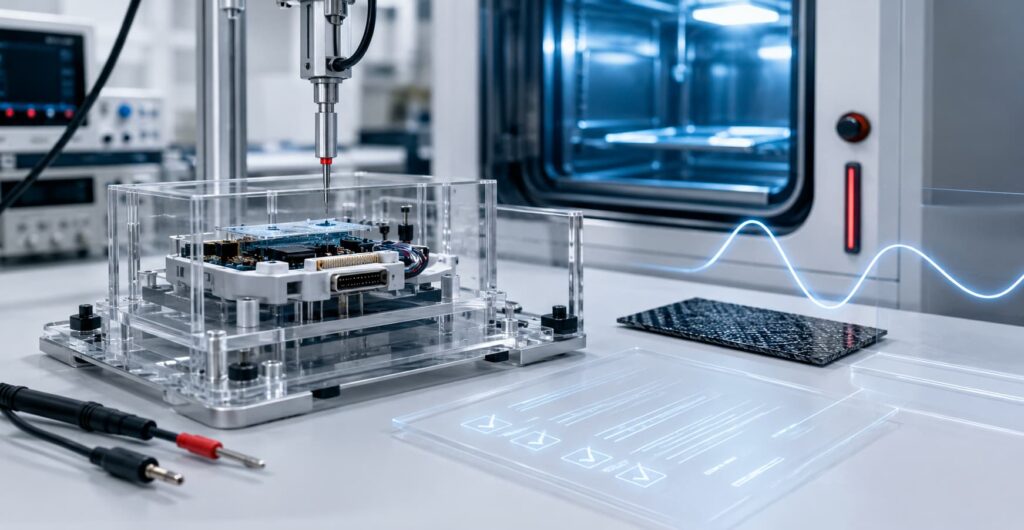
Environmental testing for medical devices evaluates device performance, reliability, and durability under the environmental conditions it may encounter during operation, storage, and transportation. Testing can include exposure to temperature and humidity variations, atmospheric pressure, vibration, mechanical shock, and other relevant environmental stresses.
These tests help verify that a device continues to function as intended without compromising safety or performance. For example, medical devices may be tested to confirm their ability to withstand rugged operating environments, maintain specified performance under temperature and humidity variations, and endure vibration and shock experienced during transportation and handling. The results help manufacturers identify potential weaknesses and demonstrate that the device can meet defined environmental and reliability requirements throughout its intended lifecycle.
10. Security Testing
Security testing evaluates the resilience of connected and software-enabled medical devices against cybersecurity threats. It can assess areas such as authentication, access control, data protection, communication security, and vulnerability management. For devices with network or software connectivity, security testing helps identify potential risks that could affect device functionality, patient safety, or sensitive health data. Manufacturers should consider applicable regulatory expectations, including the FDA’s Cybersecurity in Medical Devices: Quality System Considerations and Content of Premarket Submissions guidance.
Medical Device Testing Process
Medical device testing spans the product lifecycle, with testing activities that are frequently repeated or refined as the design, risk profile, and regulatory requirements evolve. A typical medical device testing process includes the following stages:
1. Planning and Requirement Analysis
Testing begins by defining device requirements, intended use, applicable standards, and acceptance criteria. Risk assessment is also performed to identify potential hazards and determine the testing needed to mitigate identified risks, with ISO 14971 providing the framework for medical device risk management.
2. Design Verification and Validation
Design verification confirms that the device meets the specified design requirements, while validation evaluates whether the finished device meets user needs and intended-use requirements. Activities may include functionality, performance, usability, and software testing.
3. Biocompatibility and Material Testing
Depending on the device, testing may assess material properties, biological safety, and biocompatibility, particularly for patient-contacting components. Preclinical evaluations may also be conducted to assess safety and performance before clinical use.
4. Regulatory and Standards-based Testing
Devices undergo testing against applicable regulatory requirements and recognized standards. Depending on the device, this may include electrical safety and performance testing under IEC 60601, electromagnetic compatibility (EMC), software verification and validation, environmental testing, and other device-specific evaluations.
5. Clinical Evaluation and Trials
Clinical evaluation assesses whether available clinical evidence supports the device’s safety and performance for its intended purpose. The extent of clinical evidence required depends on factors such as device classification, intended use, risk, and applicable regulatory requirements.
6. Post-market Surveillance Testing
Testing does not necessarily end after market launch. Post-market surveillance helps manufacturers monitor device performance, identify emerging risks, evaluate complaints and field data, and determine whether additional testing or corrective action is required. For applicable devices, post-market clinical follow-up (PMCF) and other surveillance activities also support ongoing regulatory compliance.
Medical Device Testing Requirements
Medical device testing requirements vary by device classification, intended use, risk profile, technology, and target market. Regulatory classification determines the level of regulatory control and evidence required, while the specific tests depend on the device and its associated risks. Manufacturers should therefore define applicable testing requirements early in the development process.
FDA Medical Device Testing Requirements
Medical devices are categorized into different classes based on the level of regulatory control needed to provide reasonable assurance of safety and effectiveness.
Class I: The lowest risk category, generally subject to General Controls. Depending on the device, testing may include basic functionality, performance, usability, electrical, mechanical, or other applicable evaluations. Many Class I devices are exempt from premarket notifications.
Class II: Moderate-risk devices subject to General Controls and Special Controls. Testing requirements can include device-specific performance testing, electrical safety, EMC, software, biocompatibility, usability, and other evaluations defined by applicable controls or guidance. Many Class II devices are marketed through the 510(k) pathway.
Class III: The highest-risk category, subject to General Controls and Premarket Approval (PMA). These devices typically require more extensive safety and effectiveness of evidence and may require clinical data to support the PMA application.
Manufacturers must also comply with the FDA’s Quality Management System Regulation (QMSR) under 21 CFR Part 820. Effective February 2, 2026, the QMSR replaced the previous Quality System Regulation framework and incorporates ISO 13485:2016 by reference.
EU MDR Medical Device Testing Requirements
Under EU MDR 2017/745, medical devices are classified as Class I, Class IIa, Class IIb, or Class III, with regulatory scrutiny increasing with device risk.
Class I devices generally have the least burdensome conformity assessment route. Manufacturers can generally assess conformity themselves, although certain Class I devices, including those supplied sterile, with a measuring function, or reusable surgical instruments, require notified body involvement for the relevant aspects of conformity assessment.
Class IIa, Class IIb, and Class III devices generally require involvement of a Notified Body in the conformity assessment process. The extent of assessment increases with device classification and risk. Class III devices are subject to the highest level of conformity assessment, while specific requirements also apply to Class IIb devices and certain implantable devices.
Depending on the device, evidence may include risk management, biocompatibility, electrical safety, EMC, software verification and validation, usability, performance testing, clinical evaluation, and environmental testing.
CDSCO Medical Device Testing Requirements in India
India follows a risk-based classification system under the Medical Devices Rules, 2017. CDSCO classifies medical devices into four categories: Class A, Class B, Class C, and Class D, representing increasing levels of risk.
Class A: Low risk
Class B: Low-moderate risk
Class C: Moderate-high risk
Class D: High risk
The applicable testing, documentation, licensing, and regulatory requirements depend on the device’s classification, intended use, applicable standards, and specific regulatory pathway. CDSCO maintains risk-classification lists that are updated as classifications evolve.
For companies developing or manufacturing medical devices in India, considering CDSCO requirements early in the development and testing process can help align product design, testing, technical documentation, and regulatory submissions with the intended market pathway. CDSCO also maintains provisions for registered medical device testing laboratories and notified bodies under the Medical Devices Rules.
India is increasingly becoming an important destination for medical device development and manufacturing. Our Make in India resources explore the capabilities, infrastructure, and advantages that support MedTech manufacturing in the country.
For manufacturers evaluating India as a production base, there are several reasons to choose India, from its expanding MedTech ecosystem and engineering capabilities to its established manufacturing infrastructure.
Testing Requirements Depend on the Device
Regulatory classification provides the framework, but it does not prescribe one universal set of tests for every device within a class. The final testing strategy should consider the device’s intended use, materials, patient contact, software, connectivity, energy source, operating environment, and identified risks.
Depending on these factors, manufacturers may need to conduct functional and performance testing, electrical safety and EMC testing, biocompatibility and material testing, usability testing, software V&V, environmental testing, cybersecurity testing, and clinical evaluation.
Medical Device Testing Standards
Testing medical devices typically involves a combination of international standards, regulatory requirements, and device-specific specifications. The applicable standards depend on the device’s technology, intended use, materials, patient contact, software, and risk profile. The following standards are amongst those that are most commonly referenced in medical device development and testing.
Testing Standards and Scope
| Standard | What it covers | Applies to |
| IEC 60601-1:2026 | Electrical safety, general requirements | Electromechanical devices (monitors, infusion pumps) |
| IEC 60601-1-2 | Electromagnetic compatibility (EMC) | All electronic medical devices |
| IEC 62304 | Software lifecycle processes | Devices with embedded/standalone software |
| ISO 10993-1:2025 series | Biocompatibility | Devices in patient contact |
| ISO 14971 | Risk management | All devices, all classes |
| IEC 62366 | Usability engineering | Devices with a user interface |
| ISO 11607-1/2 | Sterile packaging | Sterile devices |
| ISO 14155:2026 | Clinical investigations (GCP) | Devices in clinical trials |
| ISO 13485:2016 | Quality management systems | Manufacturers (not a test standard itself, but governs how testing is documented and controlled — worth including since SJML is ISO 13485 certified) |
Not every standard applies to every medical device, and compliance with a standard does not necessarily mean that a specific test is required. Manufacturers should identify applicable standards based on device characteristics, intended use, risk assessment, and target market requirements.
For example, ISO 10993-1:2025 is the current edition of the standard’s Part 1 and provides principles for evaluating biological safety within a risk management process. ISO 13485:2016 is a quality management system standard rather than a testing standard itself, but it is relevant to how testing activities, records, processes, and quality controls are established and maintained.
Medical Device Testing Areas
Medical device testing covers multiple areas, from design verification and validation to electrical safety, software, usability, reliability, and cybersecurity. The specific testing required depends on the device’s intended use, technology, risk profile, materials, and applicable regulatory standards.
Design Verification vs. Design Validation
These terms are often used interchangeably, but they address two different questions:
Design Verification: Verification confirms that design outputs meet defined design inputs and specifications. Activities may include inspection, analysis, testing, and evaluation against established requirements.
Design Validation: Validation confirms that the finished device meets user needs and intended-use requirements under actual or simulated use conditions.
In simple terms, verification focuses on design requirements, while validation focuses on intended use and user needs. FDA design-control guidance similarly distinguishes verification from validation and describes testing under actual or simulated use conditions as part of validation.
Electrical Safety Testing
Electrical safety testing evaluates whether medical electrical equipment operates safely under normal and specified fault conditions. Depending on the device, testing may assess protection against electric shock, leakage currents, insulation, grounding, dielectric strength, temperature, and other safety-related characteristics.
EMC Testing
Electromagnetic compatibility (EMC) testing evaluates both the electromagnetic emissions produced by a device and its ability to operate correctly when exposed to electromagnetic disturbances. This is particularly important for connected and electronic medical devices that may operate alongside other equipment in hospitals and clinical environments.
Software Testing
Software testing verifies that software functions according to defined requirements and performs reliably within the medical device. It can include unit, integration, system, performance, interface, error-handling, regression, and cybersecurity testing, as applicable. Software V&V should be integrated into the broader device development and risk-management process.
Sterilization Validation
For devices that are supplied sterile, sterilization validation demonstrates that the selected sterilization process can consistently achieve the required level of sterility without adversely affecting the device. Depending on the method, this may involve processes such as ethylene oxide, radiation, or moist heat sterilization. FDA expects sterilization processes to be validated and controlled throughout production.
Packaging Validation
Packaging validation verifies that the packaging system can protect the device and, where applicable, maintain sterility throughout handling, transportation, and storage. Testing can include package integrity, seal strength, distribution simulation, aging, and environmental exposure. ISO 11607 provides a framework for evaluating packaging systems for terminally sterilized medical devices.
Human Factors and Usability Engineering
Human factors and usability engineering focus on how intended users interact with the device, its user interface, and its use environment. Unlike a standalone usability test, human factors engineering is an iterative design discipline used to identify and reduce use-related risks. It considers users, use environments, interfaces, controls, displays, alarms, labeling, packaging, and other points of interaction.
Reliability and Accelerated Life Testing
Reliability testing evaluates whether a device can consistently perform its intended function over its expected service life. Accelerated life testing exposes devices or components to elevated or intensified conditions to accelerate degradation or failure mechanisms and assess long-term reliability within a shorter testing period. Depending on the device, testing may assess repeated operation, thermal cycling, vibration, mechanical stress, or other relevant loads.
Cybersecurity Testing
For connected and software-enabled devices, cybersecurity testing evaluates whether security controls can protect the device, its data, and connected systems against identified threats. Testing may include vulnerability assessment, penetration testing, authentication and access-control testing, communication security, software update mechanisms, and verification of threat mitigations. FDA recommends cybersecurity testing beyond standard software V&V to demonstrate the effectiveness of security controls.
Cybersecurity should be addressed throughout the device lifecycle rather than treated as a final pre-market check, particularly for devices connected to hospital networks, cloud platforms, mobile applications, or other medical devices.
Building a Strong Testing Strategy
An effective strategy for testing medical devices should be integrated into development from the outset rather than added after design freeze. The objective is not simply to maximize the number of tests, but to generate the right evidence at the right stage while keeping risks, timelines, and production requirements in view.
Build Testing into Design Controls Early
Testing requirements should be identified alongside design inputs, risk analysis, applicable standards, and acceptance criteria from the beginning of development. Waiting until design freeze can expose gaps that require redesign, repeat testing, or additional documentation. Integrating verification and validation planning into design controls gives engineering and manufacturing teams greater visibility into what must be demonstrated before design transfer.
Use Risk to Determine What to Test
Testing should be proportionate to the risks associated with the device and its components. Outputs from the ISO 14971 risk management process can help identify which characteristics, functions, and failure modes require verification and how much evidence is appropriate. This prevents excessive resource spending on extensive testing of low-risk elements while ensuring safety-critical functions receive adequate coverage.
Use a DVP&R to Govern Verification
A Design Verification Plan & Report (DVP&R) provides a structured framework for defining and tracking verification activities. It can link design requirements to applicable standards, test methods, acceptance criteria, samples, responsibilities, and results. Maintaining this traceability helps teams identify gaps early and provides a consolidated record of verification evidence.
Select Qualified Testing Partners
External laboratories should be evaluated for technical competence, relevant test capabilities, equipment, experience, and accreditation. ISO/IEC 17025 accreditation is a strong baseline when selecting laboratories because it provides assurance that a laboratory operates competently and can generate valid, reliable results.
Run Compatible Tests in Parallel
Where the device, samples, standards, and development stage allow, compatible testing activities can be planned in parallel rather than sequentially. For example, electrical safety, EMC, environmental, software, or performance activities may be scheduled concurrently when their dependencies permit. This can reduce idle time and shorten the overall verification cycle without compromising test integrity.
Plan for Re-Test Cycles
First-pass failures, design changes, and inconclusive results are a normal part of device development. Testing schedules and budgets should therefore include contingency for investigation, corrective action, sample replacement, and re-testing. Treating re-test capacity as part of the original plan can reduce the impact of unexpected findings on the overall development timeline.
Track Testing KPIs
A small set of testing KPIs can help identify recurring issues and improve future development cycles. Useful measures include:
- Test pass rate: Percentage of planned tests completed successfully on the first attempt.
- Defect density: Number of identified defects relative to the defined test scope or product complexity.
- MTBF (Mean Time between Failures): A reliability measure indicating the average operating time between failures.
- MTTR (Mean Time to Repair): The average time required to restore a device or system after a failure.
Together, these measures provide visibility into testing effectiveness, product reliability, and areas where engineering or process improvements may be needed.
Conclusion
Medical device testing is a critical step in developing and manufacturing electronic medical devices. By employing a variety of testing types and methodologies, manufacturers can ensure functionality, performance, safety, and usability. Real-world case studies demonstrate successful implementation of testing practices. By prioritizing comprehensive testing protocols, electronic medical device contract manufacturing companies can adhere to regulations, produce high-quality devices, and build a reputation for reliability and safety. This guide equips companies with knowledge and best practices to excel in the competitive healthcare technology landscape.
To prevent crisis and accelerate successful Go-To-Market without limiting the financial and functional glitches testing at multiple levels is of utmost importance.
FAQs:
1. What is medical device testing?
Medical device testing evaluates whether a device meets defined requirements for safety, performance, reliability, usability, and regulatory compliance throughout its development and lifecycle.
2. What are the main types of medical device tests?
Common types include functional, performance, electrical safety, EMC, software, biocompatibility, usability, environmental, reliability, sterilization, packaging, cybersecurity, and clinical testing, depending on the device and applicable requirements.
3. What’s the difference between design verification and design validation?
Design verification confirms that the device meets specified design requirements, while design validation confirms that it meets user needs and intended-use requirements under actual or simulated use conditions.
4. Is clinical testing required for every medical device?
No, clinical testing is not required for every medical device; the need for clinical evidence depends on factors such as device classification, risk, intended use, existing evidence, and applicable regulatory requirements.
5. How long does medical device testing typically take?
Testing can take anywhere from several weeks to several months or longer, depending on device complexity, testing scope, laboratory availability, regulatory requirements, and the need for repeat testing or clinical evaluation.
6. What standards apply to medical device testing in the US, EU, and India?
Requirements vary by market and device, with FDA regulations and applicable standards in the US, EU MDR 2017/745 in Europe, and CDSCO requirements under the Medical Devices Rules, 2017 in India.