Molecular diagnostics is rapidly transforming healthcare from reactive treatment to precision-driven, personalized intervention. At the center of this transformation lies gel electrophoresis, a foundational analytical technique that continues to evolve alongside advances in automation, microfluidics, AI-driven diagnostics, and integrated life sciences instrumentation.
As the MedTech industry accelerates toward decentralized diagnostics and high-throughput laboratory systems, electrophoresis platforms are becoming smarter, more automated, and increasingly integrated with advanced electronics and software ecosystems.
Role of Electrophoresis in Modern Diagnostics
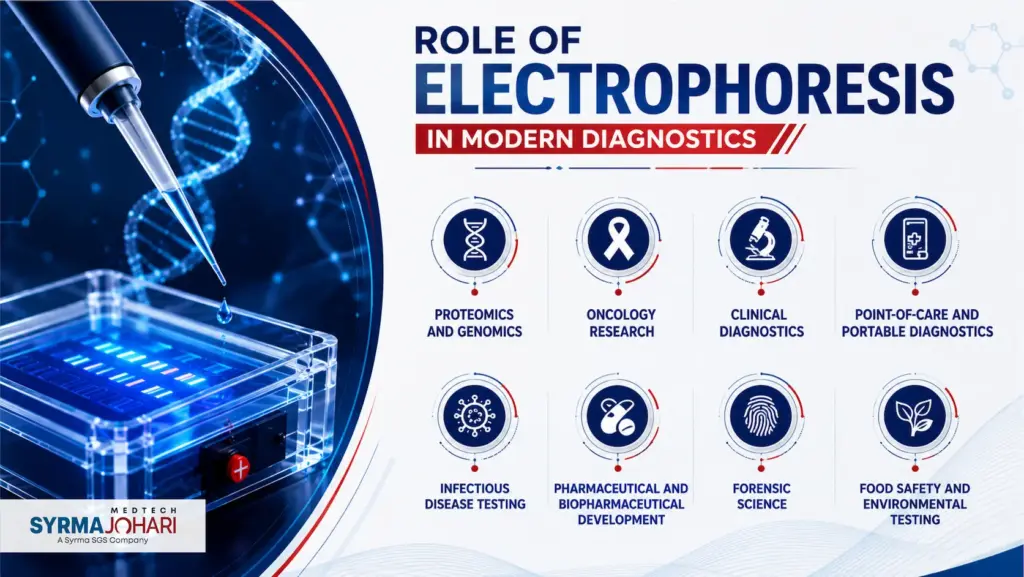
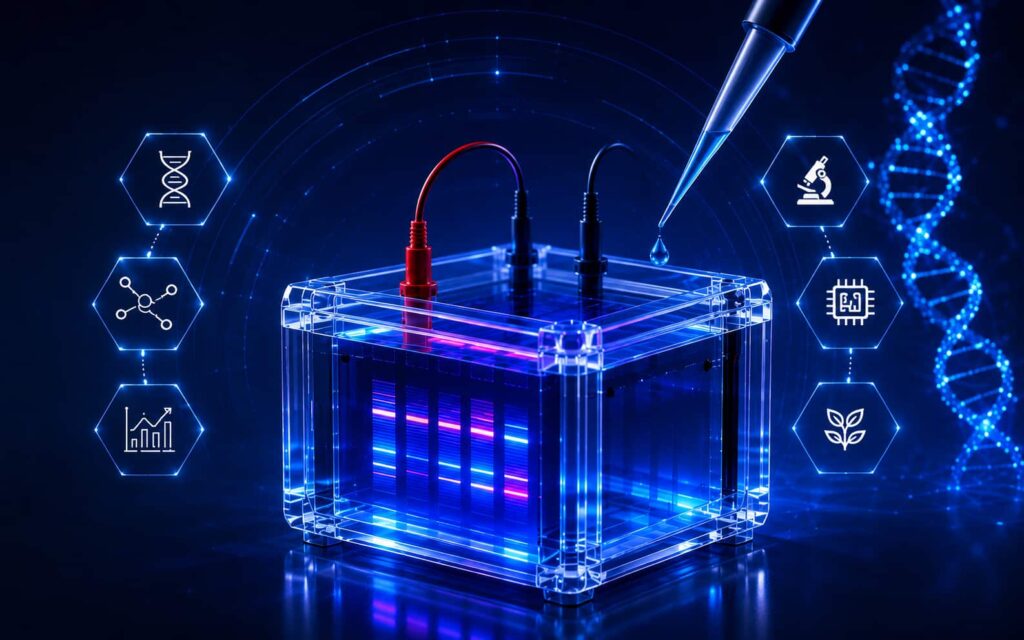
Electrophoresis is a laboratory technique used to separate biomolecules such as DNA, RNA, and proteins based on characteristics including size, charge, and molecular structure. The process involves applying an electric field to move molecules through a gel or capillary medium, enabling precise molecular analysis.
Today, electrophoresis supports a broad range of applications across:
- Proteomics And Genomics
- Oncology Research
- Clinical Diagnostics
- Point-of-Care and Portable Diagnostics
- Infectious Disease Testing
- Pharmaceutical and Biopharmaceutical Development
- Forensic Science
- Food Safety and Environmental Testing
As healthcare systems increasingly prioritize precision medicine and rapid diagnostics, electrophoresis technologies continue to gain strategic importance.
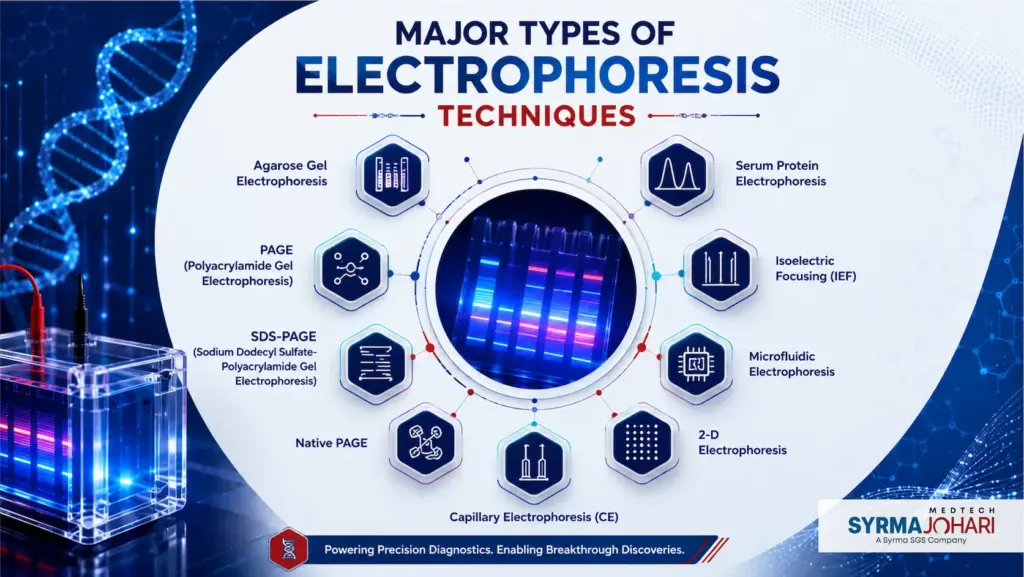
Major Types of Electrophoresis Techniques
| Electrophoresis Types | Use Case |
| Agarose Gel Electrophoresis | Widely used for separating DNA and RNA fragments, agarose gel electrophoresis utilizes a porous polysaccharide gel matrix that enables efficient nucleic acid migration and visualization. |
| PAGE (Polyacrylamide Gel Electrophoresis) | PAGE is commonly used for protein separation based on size, shape, and charge while maintaining native molecular characteristics. |
| SDS- PAGE (Sodium Dodecyl Sulfate- Polyacrylamide Gel Electrophoresis) | SDS-PAGE denatures proteins before separation, ensuring molecules are analyzed primarily by molecular weight. |
| Native PAGE | Unlike SDS-PAGE, Native PAGE preserves protein structure and biological activity during separation. |
| Capillary Electrophoresis (CE) | Capillary electrophoresis uses narrow capillaries filled with electrolyte solutions to deliver high-resolution molecular separation based on charge-to-mass ratios with minimal sample volumes and faster turnaround times. |
| Serum Protein Electrophoresis (SPEP) | Serum protein electrophoresis is extensively used in clinical diagnostics to identify abnormal protein patterns associated with conditions such as multiple myeloma, liver disease, and immune disorders. |
| Isoelectric Focusing (IEF) | IEF separates proteins based on their isoelectric points within a pH gradient and plays a major role in proteomics workflows. |
| Microfluidic Electrophoresis | Miniaturized microfluidic systems support rapid, automated, and portable molecular analysis, particularly valuable in point-of-care diagnostics. |
| 2-D Electrophoresis | 2-D Electrophoresis is an advanced method that combines IEF and SDS-PAGE to achieve highly detailed protein separation for complex proteomics applications. In the first dimension (IEF), the proteins are separated along an IPG (immobilized pH gradient) strip, based on the isoelectric point. The proteins will be holding zero net charge in this step. In the second dimension (SDS-PAGE), the IPG strip will then be loaded alongside a polyacrylamide gel. This reaction will execute perpendicular separation of the proteins, based on their molecular weight. |
7 Emerging Trends Transforming Gel Electrophoresis
1. Point-of-Care Electrophoresis
Advancements in microfluidics, nanotechnology, integrated biosensors and compact electronics are making point-of-care electrophoresis increasingly viable for decentralized healthcare settings. Lab-on-chip systems now enable rapid nucleic acid and protein analysis with significantly reduced sample and reagent requirements, making them well-suited for emergency diagnostics, infectious disease testing, and resource-constrained environments.
Revvity Inc. deploys lab-on-chip technology in its LabChip GXII Touch instrument used for automated protein and nucleic acid analysis. Researchers intensively use it for drug development, preclinical research, and quality control for therapies of melanoma, neurodegeneration, viral infections, genetic disorders, etc.
2. Automated Electrophoresis Systems for Integrated Diagnostics
Traditional gel electrophoresis workflows often involve labor-intensive manual handling, creating variability and limiting scalability. Modern automated electrophoresis systems now integrate sample preparation, separation, detection, data acquisition and AI-assisted interpretation into streamlined diagnostic workflows. Automation improves throughput, reproducibility, traceability, operational efficiency while reducing human error and accelerating research timelines.
This trend is especially important in high-volume molecular diagnostics and biopharmaceutical quality control laboratories. Experion automated electrophoresis system of Bio-Rad Laboratories, Inc. supports seamless protein separation and was designed for analysis of RNA, DNA and protein.
3. Microchip Technology for Electrophoresis
Microchip electrophoresis (ME) is emerging as a highly efficient alternative to traditional slab-gel methods. To improve sensitivity and accuracy, modern ME systems integrate on-chip microfluidic sample preparation techniques such as membrane filtration and dielectrophoresis. Advancements in materials like PMMA, PDMS, and paper-based polymers, along with integrated optical and electrochemical detection systems, are further enhancing ME performance and detection sensitivity. This makes microchip electrophoresis increasingly attractive for point-of-care testing, environmental monitoring, genomics research, clinical diagnostics and so on.
4. Advanced Molecular Characterization with CE-MS Integration
CE-MS is a recently adopted analytical technique that combines the high-resolution separation capabilities of capillary electrophoresis with the selective & sensitive detection mechanism of MS. However, the limited availability of CE-MS instruments is a challenge! Therefore, it becomes important for researchers and diagnostic practitioners to obtain reliable CE-MS systems with features like solvent gradient capability, auto sampling, thermostat cooling, and others.
With CE-MS, only tiny volumes or nanoliters of the sample will be required for diagnostic analysis. This approach can seamlessly separate polar or charged compounds that are usually challenging to execute through the reversed-phase LC-MS.
7100 CE system by Agilent Technologies, Inc. performs oligonucleotides and ion analysis for applications from vaccines to gene therapy. As precision medicine expands globally, demand for CE-MS-enabled diagnostic platforms is expected to increase substantially.
5. Application of Electrophoresis in Genetic Research
The growing adoption of precision medicine and genomic diagnostics continues to strengthen the role of electrophoresis technologies. Researchers can now isolate DNA fragments and analyze them to facilitate genetic sequencing, detect mutations, and more. It helps in understanding rare genetic disorders, achieving milestones in forensic science, and making personalized medicine.
The modern-day serum protein electrophoresis platforms are now integrated with advanced AI software solutions, facilitating seamless data interpretation and quick identification of genetic markers. Meanwhile, miniaturized and automated electrophoresis systems are helping laboratories achieve faster turnaround times and improved workflow efficiency.
6. Chromatographic Preconcentration for Improved CE Sensitivity
The chromatographic preconcentration method is a popular technique for tackling the limited sensitivity of Capillary Electrophoresis (CE), which is mostly caused by small injection volumes. This method is executed by coupling the electrophoretic capillary with membrane preconcentration, solid-phase extraction (SPC), or other chromatographic efforts.
Chromatographic preconcentration enables researchers to load larger sample volumes, ranging from 100µL to several ml, which was earlier limited to just a nanoliter-level of injection. This technique, conducted alongside CE, removes the interferences in complex matrices such as urine, polluted water samples, serum, and others.
7. Sustainability in IVD Design
Sustainability is becoming an important consideration across the life sciences industry, including electrophoresis workflows. Relying on the traditional gel electrophoresis approach involves the use of hazardous materials such as acrylamide and ethidium bromide, leading to severe environmental and health risks if not handled adequately. Safer nucleic acid stains such as SYBR Safe or GelRed as a replacement for ethidium bromide, safer gel matrices such as agarose gels and N-Isopropylacrylamide (NIPAM) gels as a replacement for acrylamide are being adopted as reliable options.
With the sustainability and eco-friendliness trend picking up the pace for electrophoresis, the labs are now practicing the use of tools like GAPI (Green Analytical Procedure Index) and AGREE (Analytical Greenness Metric), enabling researchers to track the environmental impact of their preferred methods.
Core Contribution of Gel Electrophoresis PCB in Life Sciences
While electrophoresis is primarily associated with molecular biology and analytical chemistry, the underlying electronics architecture plays an equally vital role in system performance. At the core of modern electrophoresis instruments is the gel electrophoresis PCB, responsible for precision voltage control, signal integrity, temperature monitoring, data acquisition, real-time communication, and automation workflows. The reliability of PCB design directly influences analytical reproducibility, instrument stability, diagnostic accuracy, and overall safety performance.
As electrophoresis platforms evolve toward high-throughput, automated diagnostics, advanced PCB integration has become increasingly important to support applications such as AI-enabled analysis, microfluidic systems, nucleic acid testing, and automated sample handling. For example, DNA amplification PCBs are widely used for nucleic acid analysis, while Microplate Reader PCBs enable efficient high-throughput screening workflows. In addition, life sciences electrophoresis PCBs are engineered to remain stable even in complex electromagnetic environments, helping protect sensitive experiments and valuable biological samples.
Why MedTech CDMOs are Strategic Partners for Electrophoresis Innovation?
As molecular diagnostics and life sciences technologies evolve, electrophoresis systems are becoming significantly more complex. CDMOs deliver modern platforms that have precision engineering, advanced PCB integration, embedded software capabilities, regulatory readiness and scalable manufacturing infrastructure. As a result, MedTech OEMs are seeking engineering and manufacturing partners capable of delivering robust, scalable, and compliant electronics architectures. Developing these capabilities entirely in-house can increase development costs, extend timelines, and create operational bottlenecks. This is where MedTech-focused CDMOs are creating strategic value.
How MedTech CDMOs Accelerate Electrophoresis Device Development?
- Rapid Prototyping and Design Iteration – Accelerates product validation and shortens time-to-market.
- Advanced Manufacturing Infrastructure – Provides access to precision electronics manufacturing and automated assembly systems.
- Regulatory Compliance Support – Helps OEMs navigate requirements such as ISO 13485, US FDA 510(k), GMP, MDSAP and so on.
- Supply Chain Resilience – Improves component availability and minimizes production disruptions.
- Scalable Production – Supports transition from prototype to commercial-scale manufacturing efficiently.
How Syrma Johari MedTech Builds Future-Ready Electrophoresis Systems?
As electrophoresis systems continue evolving toward automation, miniaturization, and AI-driven diagnostics, OEMs require engineering and manufacturing ecosystems capable of supporting increasingly sophisticated device architectures.
Syrma Johari MedTech combines electronics engineering expertise, precision manufacturing capabilities, and MedTech regulatory proficiency to support the development of next-generation electrophoresis platforms.
Key capabilities include:
- Compliance with ISO 13485:2016, GMP, MDSAP, and US FDA requirements
- Advanced SMT manufacturing with high-precision placement capability
- ISO Class 7 and Class 8 cleanroom infrastructure
- Strong global supply chain ecosystem
- Design-for-manufacturing (DFM) expertise
- End-to-end MedTech CDMO support
From PCB engineering and embedded systems integration to scalable manufacturing and regulatory support, Syrma Johari MedTech helps MedTech innovators accelerate the development of reliable, compliant, and future-ready electrophoresis instruments.
To explore how Syrma Johari MedTech can support your electrophoresis device development and manufacturing initiatives, connect with our team today.