
[et_pb_section bb_built=”1″][et_pb_row][et_pb_column type=”4_4″][et_pb_text admin_label=”Intro” _builder_version=”3.0.98″ background_layout=”light”]
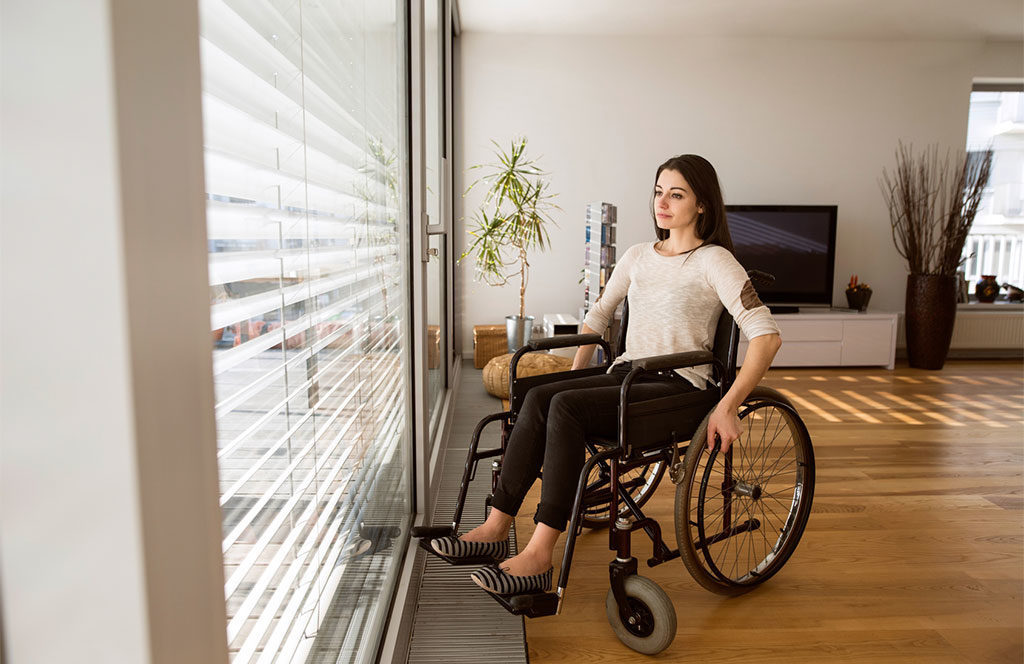
Paralysis is basically loss of control over a muscle or group of muscles in a part of the body. This loss of control occurs due to loss in muscle strength. Paralysis can be gradual or sudden, partial or complete and temporary or permanent without any symptoms. Paralysis can affect any part of the body at any point of time in life. Most of the time, paralysis is not due to some muscle problems. It happens more likely due to problem somewhere in the chain of nerve cells that runs from the body part to your brain and vice versa. Therefore different paralysis treatment are necessary to understand.
[/et_pb_text][/et_pb_column][/et_pb_row][/et_pb_section][et_pb_section bb_built=”1″ fullwidth=”off” specialty=”off” _builder_version=”3.0.98″][et_pb_row][et_pb_column type=”1_2″][et_pb_text _builder_version=”3.0.98″ background_layout=”light” border_width_bottom=”1px” header_2_text_color=”#0c71c3″]
BASIC SYMPTOMS
[/et_pb_text][et_pb_text admin_label=”basic symptoms of Paralysis” _builder_version=”3.0.98″ background_layout=”light”]
Symptoms of paralysis may differ depending upon the cause, but are often easy to spot. Sometimes one might feel a tingling or numbing sensations or muscle cramps before the paralysis sets in. Some common symptoms of paralysis are:-
[icon name=”angle-right” class=”” unprefixed_class=””] A person born paralyzed due to a birth defect
[icon name=”angle-right” class=”” unprefixed_class=””] Stroke or spinal cord injury
[icon name=”angle-right” class=”” unprefixed_class=””] Multiple sclerosis
[icon name=”angle-right” class=”” unprefixed_class=””] Muscle stiffness before paralysis attack
[icon name=”angle-right” class=”” unprefixed_class=””] Gradual loss of muscle control.
[/et_pb_text][/et_pb_column][et_pb_column type=”1_2″][et_pb_text _builder_version=”3.0.98″ background_layout=”light” border_width_bottom=”1px” header_2_text_color=”#0c71c3″]
COMMON TYPES
[/et_pb_text][et_pb_text admin_label=”Paralysis: Common Types” _builder_version=”3.0.98″ background_layout=”light”]
As paralysis can happen to any muscle and many body functions can be affected. Paralysis can be classified in many different types and degrees.
Here are some common types:
[icon name=”angle-right” class=”” unprefixed_class=””] Monoplegia: affects one limb only, such as one arm or one leg.
[icon name=”angle-right” class=”” unprefixed_class=””] Hemiplegia: affects one side of the body, like one leg & arm of the same side.
[icon name=”angle-right” class=”” unprefixed_class=””] Diplegia: affects the same area on both sides of the body, like both arms.
[icon name=”angle-right” class=”” unprefixed_class=””] Paraplegia: affects both legs and sometimes parts of the trunk.
[icon name=”angle-right” class=”” unprefixed_class=””] Quadriplegia: affects both arms & legs; or even the entire area from neck down.
[/et_pb_text][/et_pb_column][/et_pb_row][et_pb_row][et_pb_column type=”4_4″][et_pb_image _builder_version=”3.0.98″ src=”https://sjmedtech.com/wp-content/uploads/2019/09/Johari-Digital-Paralysis-Treatment.jpeg” show_in_lightbox=”off” url_new_window=”off” use_overlay=”off” always_center_on_mobile=”on” force_fullwidth=”off” show_bottom_space=”on” /][/et_pb_column][/et_pb_row][/et_pb_section][et_pb_section bb_built=”1″ fullwidth=”off” specialty=”off”][et_pb_row][et_pb_column type=”4_4″][et_pb_text admin_label=”What Causes Paralysis or Stroke” _builder_version=”3.0.98″ background_layout=”light” header_2_text_color=”#0c71c3″]
What Causes Paralysis or Stroke
[/et_pb_text][/et_pb_column][/et_pb_row][et_pb_row][et_pb_column type=”1_2″][et_pb_text _builder_version=”3.0.98″ background_layout=”light”]
In a human body, movement of the muscles is controlled by trigger signals that are relayed from the brain to muscles. The relay system comprises of brain, spinal cord and nerves. When any part of the relay is damaged, the signals to move do not transmits properly to the muscles as they and hence results in paralysis. There are many ways through which relay system can be damaged like stroke, spinal cord injury, birth defects or brain injury. People with paralysis often feel following problem:
- Problem in breathing and unstable blood flow & heart rate
- Changes in the normal function of organs and other tissues
- Skin injuries and pressure sores
- Blood clots in the legs
- Loss of bowel and bladder control
- Trouble in speaking or swallowing
[/et_pb_text][/et_pb_column][et_pb_column type=”1_2″][et_pb_image _builder_version=”3.0.98″ src=”https://sjmedtech.com/wp-content/uploads/2019/09/Strokes-Paralysis-Johari-Digital-Devices.jpg” show_in_lightbox=”off” url_new_window=”off” use_overlay=”off” always_center_on_mobile=”on” force_fullwidth=”off” show_bottom_space=”on” /][/et_pb_column][/et_pb_row][/et_pb_section][et_pb_section bb_built=”1″ fullwidth=”off” specialty=”off” _builder_version=”3.0.98″ background_color=”#c6c6c6″][et_pb_row][et_pb_column type=”4_4″][et_pb_text _builder_version=”3.0.98″ background_layout=”light”]
How to treat Paralytic Patients with Electrotherapy
A review of more several studies found that electrotherapy may help restore function in the paralyzed patients after SCI (Spinal Cord Injury). Electrical stimulation has been studied as a means to restore movement in paralyzed limbs.
The movement improved through electrotherapy is more systemic, involving the brain and the central nervous system, which runs along the spinal cord. It involves placing electrodes on skin which then send electrical impulses from skin to the muscles. Patients are able to move muscles that were previously lost to them due to paralysis. Electrical stimulation does not feel anything on the skin of paralytic body and it never hurts.
Electrotherapy includes combination of several therapies that is often used during stroke rehabilitation as a paralysis treatment when patients struggle with post-stroke paralysis, weakness, pain or sensory issues.
[/et_pb_text][et_pb_divider _builder_version=”3.0.98″ /][/et_pb_column][/et_pb_row][et_pb_row][et_pb_column type=”1_4″][et_pb_text admin_label=”Neuromuscular Stimulation (NMS)” _builder_version=”3.0.98″ background_layout=”light” border_width_bottom=”1px”]
Neuromuscular Electrical Stimulation (NMES)
[/et_pb_text][et_pb_text _builder_version=”3.0.98″ background_layout=”light”]
[icon name=”angle-right” class=”” unprefixed_class=””] Muscle strengthening
[icon name=”angle-right” class=”” unprefixed_class=””] Motor recovery of paralyzed limbs
[icon name=”angle-right” class=”” unprefixed_class=””] Restore / improve functions
[/et_pb_text][/et_pb_column][et_pb_column type=”1_4″][et_pb_text admin_label=”Functional Electrical Stimulation ” _builder_version=”3.0.98″ background_layout=”light” border_width_bottom=”1px”]
Functional Electrical Stimulation (FES)
[/et_pb_text][et_pb_text _builder_version=”3.0.98″ background_layout=”light”]
[icon name=”angle-right” class=”” unprefixed_class=””] Pain Management
[icon name=”angle-right” class=”” unprefixed_class=””] Stroke Rehabilitation
[icon name=”angle-right” class=”” unprefixed_class=””] Prevent Atrophy
[/et_pb_text][/et_pb_column][et_pb_column type=”1_4″][et_pb_text admin_label=”Transcutaneous Electrical Nerve stimulation ” _builder_version=”3.0.98″ background_layout=”light” border_width_bottom=”1px”]
Transcutaneous Electrical Nerve Stimulation (TENS)
[/et_pb_text][et_pb_text _builder_version=”3.0.98″ background_layout=”light”]
[icon name=”angle-right” class=”” unprefixed_class=””] Works on muscle tightness
[icon name=”angle-right” class=”” unprefixed_class=””] Improve stepping ability
[icon name=”angle-right” class=”” unprefixed_class=””] Helps in pain management
[/et_pb_text][/et_pb_column][et_pb_column type=”1_4″][et_pb_text admin_label=”Interferential & Russian Stimulation” _builder_version=”3.0.98″ background_layout=”light” border_width_bottom=”1px”]
Interferential & Russian Stimulation
[/et_pb_text][et_pb_text _builder_version=”3.0.98″ background_layout=”light”]
[icon name=”angle-right” class=”” unprefixed_class=””] Criss-cross electrodes pattern
[icon name=”angle-right” class=”” unprefixed_class=””] Strengthens muscles
[icon name=”angle-right” class=”” unprefixed_class=””] Higher intensity & Better results
[/et_pb_text][/et_pb_column][/et_pb_row][/et_pb_section][et_pb_section bb_built=”1″ fullwidth=”off” specialty=”off”][et_pb_row][et_pb_column type=”4_4″][et_pb_text _builder_version=”3.0.98″ background_layout=”light” header_2_text_color=”#0c71c3″]
Electrotherapy for Stroke Patients Proves to Be Powerful!
Electrical stimulation for stroke and paralytic patients offers a wide range of benefits. Electro-stimulation offers hope in improving motor skills and reducing numbness.
Here are the major stroke side effects that electrotherapy has been proven helpful:
[/et_pb_text][/et_pb_column][/et_pb_row][et_pb_row][et_pb_column type=”1_5″][et_pb_image _builder_version=”3.0.98″ show_in_lightbox=”off” url_new_window=”off” use_overlay=”off” always_center_on_mobile=”on” force_fullwidth=”off” show_bottom_space=”on” src=”https://sjmedtech.com/wp-content/uploads/2019/09/Hand-Paralysis-Treatment-Johari-Digital.jpg” /][/et_pb_column][et_pb_column type=”4_5″][et_pb_text admin_label=”Hemiplegia (Post-Stroke Paralysis)” _builder_version=”3.0.98″ background_layout=”light” header_3_text_color=”#0c71c3″]
1. Hemiplegia (Post-Stroke Paralysis)
Electrotherapy may help in improving movements into paralyzed muscles after stroke. Electrical stimulation activates the paralyzed muscles and exercises them to help rewire the brain. Ideally, electrotherapy can help stroke patients with paralysis to slowly regain movement.
[/et_pb_text][/et_pb_column][/et_pb_row][et_pb_row][et_pb_column type=”1_5″][et_pb_image _builder_version=”3.0.98″ show_in_lightbox=”off” url_new_window=”off” use_overlay=”off” always_center_on_mobile=”on” force_fullwidth=”off” show_bottom_space=”on” src=”https://sjmedtech.com/wp-content/uploads/2019/09/Johari-Digital-Paralysis-Treatment.jpg” /][/et_pb_column][et_pb_column type=”4_5″][et_pb_text admin_label=”Hemiparesis (Partial Loss of Movement)” _builder_version=”3.0.98″ background_layout=”light” header_3_text_color=”#0c71c3″]
2. Hemiparesis (Partial Loss of Movement)
If you struggle with extreme weakness after the stroke (not paralysis), then electrotherapy can help as paralysis treatment. By combining electrical stimulation with physical therapy exercises, one can maximize the gains.
[/et_pb_text][/et_pb_column][/et_pb_row][et_pb_row][et_pb_column type=”1_5″][et_pb_image _builder_version=”3.0.98″ show_in_lightbox=”off” url_new_window=”off” use_overlay=”off” always_center_on_mobile=”on” force_fullwidth=”off” show_bottom_space=”on” src=”https://sjmedtech.com/wp-content/uploads/2019/09/Foot-Drop-Johari-Paralysis-Treatment.jpg” /][/et_pb_column][et_pb_column type=”4_5″][et_pb_text admin_label=”Spasticity and Gait (Walking)” _builder_version=”3.0.98″ background_layout=”light” header_3_text_color=”#0c71c3″]
3. Spasticity and Gait (Walking)
Interferential therapy has been shown to help reduce spasticity in stroke patients. Stroke patients that wish to improve their balance and gait can benefit from electrotherapy because it can be applied to lower extremities with the help of a professional.
[/et_pb_text][/et_pb_column][/et_pb_row][et_pb_row][et_pb_column type=”1_5″][et_pb_image _builder_version=”3.0.98″ show_in_lightbox=”off” url_new_window=”off” use_overlay=”off” always_center_on_mobile=”on” force_fullwidth=”off” show_bottom_space=”on” src=”https://sjmedtech.com/wp-content/uploads/2019/09/Shoulder-Subluxation-and-Pain-Paralysis-Treatment-Copy.jpg” /][/et_pb_column][et_pb_column type=”4_5″][et_pb_text admin_label=”Shoulder Subluxation and Pain” _builder_version=”3.0.98″ background_layout=”light” header_3_text_color=”#0c71c3″]
4. Shoulder Subluxation and Pain
Some stroke patients struggle with a shoulder issue where the arms become dislocated from the shoulder socket. This condition is quite painful and referred to as shoulder subluxation. Electrotherapy can help in this by reducing the severity and pain. It can also help improve arm functions.
[/et_pb_text][/et_pb_column][/et_pb_row][/et_pb_section][et_pb_section bb_built=”1″ fullwidth=”off” specialty=”off”][et_pb_row][et_pb_column type=”4_4″][et_pb_text _builder_version=”3.0.98″ background_layout=”light” header_2_text_color=”#0c71c3″]
Planning to choose Electrotherapy as Paralysis Treatment?
[/et_pb_text][/et_pb_column][/et_pb_row][et_pb_row][et_pb_column type=”1_2″][et_pb_image _builder_version=”3.0.98″ show_in_lightbox=”off” url_new_window=”off” use_overlay=”off” always_center_on_mobile=”on” force_fullwidth=”off” show_bottom_space=”on” src=”https://sjmedtech.com/wp-content/uploads/2018/02/winsale_03.jpg” /][/et_pb_column][et_pb_column type=”1_2″][et_pb_text _builder_version=”3.0.98″ background_layout=”light”]
The electrical stimulation offers promising benefits to stroke-paralysis patients such as improved mobility, improved sensation and reduced pain. The combo-therapy – WinStim is US FDA 510(k) cleared device. The electrotherapy and ultrasound therapy are always safe and effective to use. Unlike in surgical treatments, people will not experience any side effects, as these are non-invasive methods for relieving pain.
Combination of electrical stimulation with physical therapy exercise is an essentially important paralysis treatment for achieving maximum results. We hope this guide to electrotherapy helps you on the road to recovery!
[/et_pb_text][et_pb_button admin_label=”Explore More” _builder_version=”3.0.98″ button_text=”Explore More” button_url=”https://sjmedtech.com/technology/winstim/” url_new_window=”off” background_layout=”light” custom_button=”off” button_icon_placement=”right” /][/et_pb_column][/et_pb_row][/et_pb_section]