Medical device prototype development is the process through which a clinical idea becomes a tangible, testable, and eventually clearable product. It is not a single event but a structured sequence of engineering decisions, each one reducing technical, regulatory, and commercial risk before the next dollar is committed.
Introduction: Why Prototype Development Defines Medical Device Success
Every medical device begins with a clinical problem. But between the initial concept and a device healthcare professionals can safely use in clinical settings, a demanding chain of engineering, compliance, and manufacturing challenges lies in between. Prototyping connects these disciplines. Developing a medical device prototype requires balancing innovation and regulatory compliance at every stage, and the organizations that treat prototyping as a structured, evidence-generating process consistently outperform those that treat it as a quick path to “something that works.”
Prototyping typically involves multiple generations, including concept, functional, and engineering prototypes. These are not aesthetic models. Each prototype generation is a decision-making tool that answers specific questions: Does the core technology work? Can users operate it safely? Will it survive the manufacturing process at scale? The development timeline for medical devices can range from months to several years depending on complexity, with Class I devices sometimes reaching production in under a year and Class III devices requiring three to seven years or more.
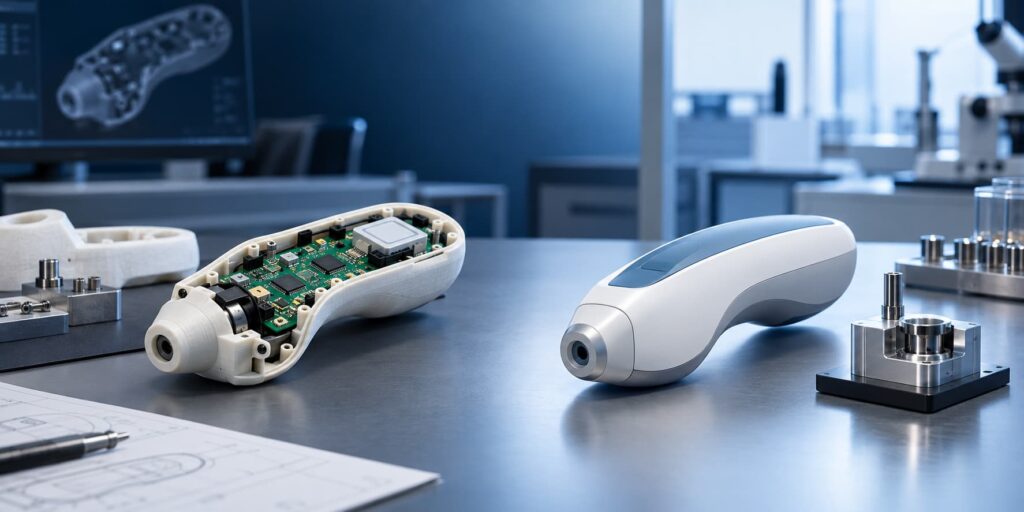
The prototyping process includes stages like proof of concept and pilot prototype, with alpha and beta builds in between. Each stage uses different technologies. 3D printing accelerates early-stage iteration. CNC machining delivers precision metal components. Injection molding validates production-intent plastics. Together, these common prototyping techniques compress cycle times and allow teams to test critical assumptions before investing significant resources in tooling and regulatory submissions.
Syrma Johari MedTech (SJML) supports this entire development process as an integrated engineering and manufacturing partner, helping medical device companies move from early functional prototyping through verification, design transfer, and commercial production under a single coordinated program.
From Clinical Need to Prototype Requirements
Medical device development starts with a clearly defined clinical problem, not with a CAD model. Whether the goal is a faster sepsis diagnostic device or a more comfortable remote monitoring wearable, the first step is translating that need into written design inputs that engineering teams can act on. Engaging stakeholders early can help address usability and compliance gaps in prototypes. Interviews with clinicians, nurses, biomedical engineers, and even patients generate user needs – statements like “deliver a point-of-care test result in under five minutes.” These are then decomposed into engineering specifications: measurement range, sensor sensitivity, fluid flow rate, battery life, and operating temperature envelope.
Early risk analysis is equally important. Implementing ISO 14971 standards helps identify and mitigate safety hazards before building hardware. A preliminary hazard analysis at this stage determines what early-stage prototypes must demonstrate versus what can wait for later verification. Regulatory pathways dictate design controls based on device classification – a Class I device has simpler documentation requirements than a Class III device requiring pre-market approval. SJML typically runs this as part of a structured development process with documented design controls and traceability from the outset, ensuring that every requirement can be traced forward to a test and backward to a user need.
Core Stages in Medical Device Prototype Development
The medical device prototyping process is iterative, with each prototype generation de-risking a different dimension: core technology feasibility, subsystem integration, usability and reliability, or manufacturability and clinical readiness. Prototyping involves a structured process that combines design, risk management, and validation, and it should include verification that the device meets defined requirements at each stage.
The four main stages are:
- Proof of concept (PoC): Validates whether the core technology works at all.
- Alpha prototype: Integrates subsystems into a single unit for functional testing.
- Beta prototype: Approaches final device performance and appearance for rigorous testing.
- Pilot / clinical prototype: Small-batch builds under production-like controls for clinical trials and regulatory validation.
Each stage ends with a phase-gate decision – a go/no-go based on evidence. Thorough documentation and evidence collection at every stage foster trust in the process, ensuring the audience feels confident that the development aligns with regulatory expectations and safety standards.
Proof-of-Concept Prototypes: Validating Technical Feasibility
Proof-of-concept prototypes validate core physics, electronics, algorithms, or fluidics without worrying about industrial design or enclosure quality. Prototyping is essential for validating medical device concepts, and the PoC is where that validation begins. The question at this stage is narrow: “Can our measurement principle achieve the required signal-to-noise ratio?” or “Can the fluidic channel deliver the analyte to the sensor within the required time?”
Concrete examples include a benchtop optical assembly for an ophthalmic imaging device – built with off-the-shelf optics, 3D-printed brackets, and a breadboard controller – or a breadboarded ECG front-end using evaluation boards to validate signal quality against noise thresholds. Typical tools include lab rigs, evaluation boards, and rapid prototyping techniques. 3D printing is a common rapid-prototyping technique at this stage, producing brackets, holders, and test fixtures in hours. Rapid prototyping can reduce development time significantly – often compressing what would take weeks with traditional manufacturing methods into days.
PoC results drive initial funding decisions and prioritization of engineering investment, particularly for startups and growth-stage MedTech companies. SJML often supports this phase with quick-turn mechanical CAD, electronics prototypes, and simple firmware to help clients move rapidly into an alpha build.
Alpha Prototypes: Integrating Form, Function, and Safety Basics
Alpha prototypes are the first integrated models combining electronics, mechanical components, firmware, and a basic user interface in a single unit. This is where subsystems that worked individually on the bench must work together – and where integration issues surface. Prototyping helps identify usability issues early in development, and the alpha stage is typically where layout, cable routing, and connector placement get their first real scrutiny.
Alpha builds are usually lab-only devices, not yet suitable for human use, but used heavily for functional testing and design verification planning. Techniques like 3D printing and CNC machining create housings and internal frames adequate for thermal analysis, EMC pre-tests, and ergonomic mockups. Prototyping helps identify usability issues before mass production, and even informal clinician walkthroughs at this stage can reveal workflow problems that would be expensive to fix later.
Early human factors input matters here – the layout of screens, buttons, and connectors should reflect clinical workflow even if formal human factors testing comes later. SJML’s teams typically use the alpha stage to iron out system architecture decisions: power budgets, PCB partitioning, cabling, and service access, establishing a stable platform before cost optimization begins.
Beta Prototypes: Approaching Final Device Performance
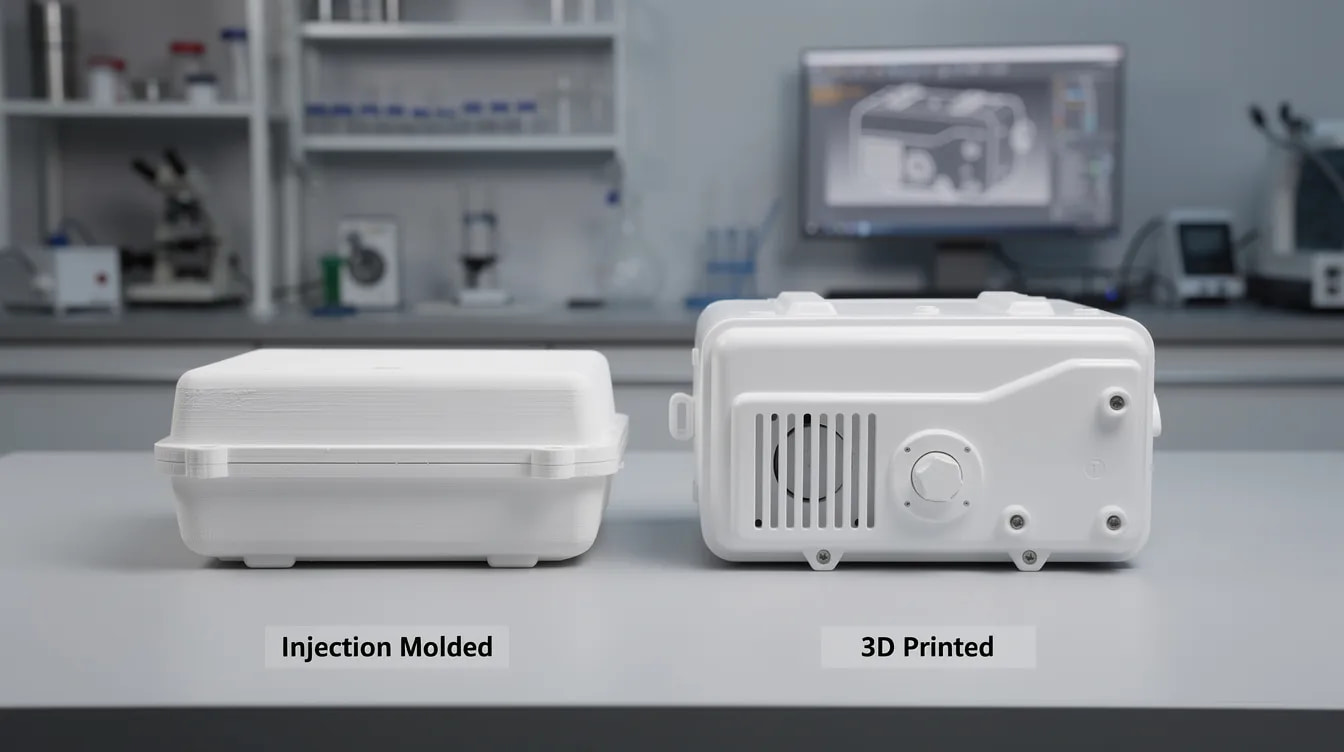
The beta prototype closely matches the eventual commercial medical device in appearance and function, built with near-production components where possible. While 3D printing may still appear in internal brackets, many external parts now shift to soft tooling or prototype injection molding to mimic final plastics, tolerances, and finishes. This is where the device starts to feel and behave like a product rather than a lab experiment.
Key activities at beta stage include:
- Structured functional testing against defined specifications
- Environmental and reliability trials (temperature cycling, vibration, drop tests)
- Human factors testing with representative end users
- Integration of updated firmware and software toward release candidates
Iterative refinement improves prototypes based on user feedback and testing, and iterative testing improves safety and usability of medical devices. Testing should include bench testing, usability testing, and clinical evaluation for prototypes – and the beta stage is where all three converge. Beta prototypes also support early clinical evaluation or formative studies where regulations allow, helping teams refine use instructions and labeling.
SJML typically uses beta builds to finalize design-for-manufacturing decisions, freeze PCB layouts, and prepare for tooling and manufacturing transfer.
Pilot and Clinical-Use Prototypes: Bridging to Commercial Manufacturing
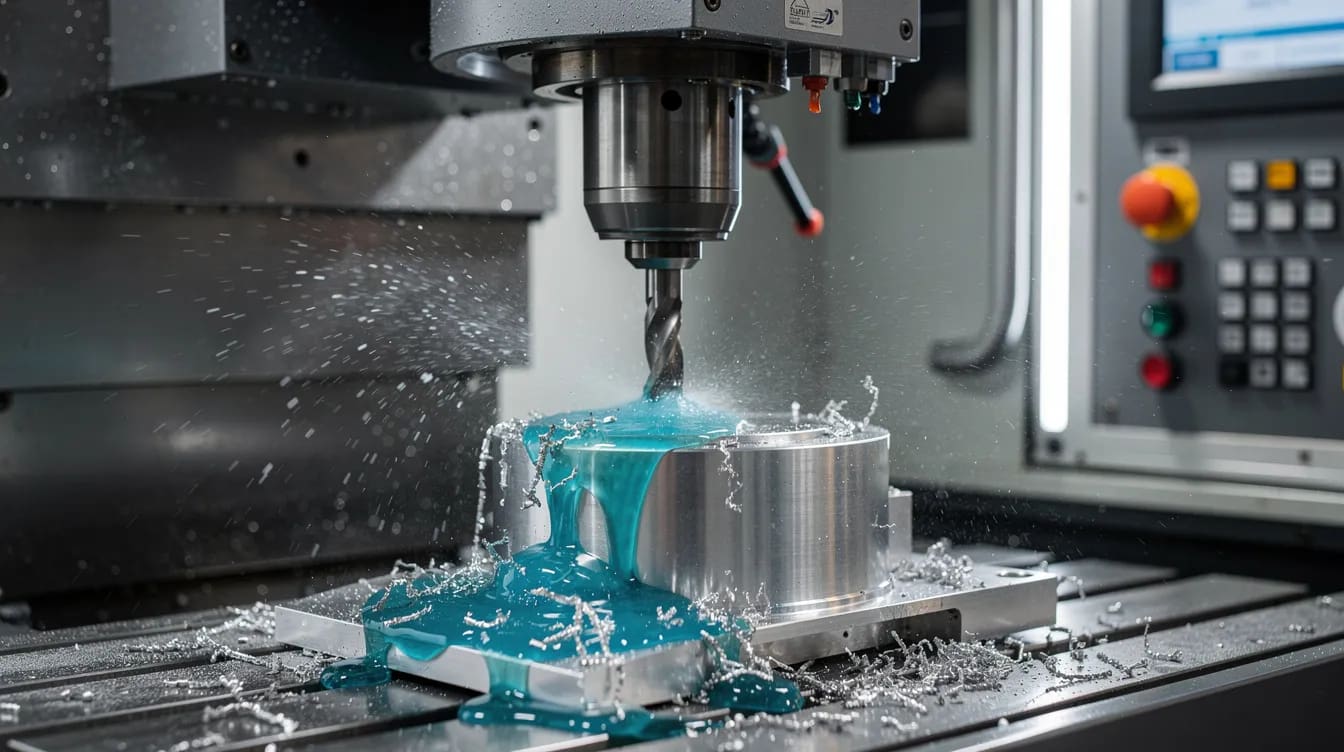
Pilot prototypes are small-batch builds – typically 20 to 50 units – manufactured using production-like processes. CNC machining produces final metal parts. Injection molding with pilot tooling produces plastics. These units are often used in summative human factors testing, clinical evaluation, and sometimes formal clinical trials aligned with regulatory pathways such as FDA 510(k) or EU MDR.
Regulatory validation involves gathering data to demonstrate compliance and preparing documentation for submissions. The emphasis at this stage shifts to process controls, lot traceability, batch records, and labeling – all mirroring future commercial production. Streamlining clinical evaluation minimizes regulatory delays, and well-documented pilot prototypes significantly reduce the time between trial completion and submission.
Pilot builds also exercise service, calibration, and field-repair procedures to ensure long-term maintainability. SJML’s industrialization teams collaborate with design engineering to refine work instructions, test fixtures, and quality plans before the full-scale production ramp-up.
Key Prototyping Technologies: 3D Printing, CNC Machining, and Injection Molding
Choosing the right prototyping technology depends on device requirements: tolerances, biocompatibility, mechanical strength, cost, and schedule. Most successful medical device development programs use all three primary methods at different stages.
| Technology | Best For | Typical Stage | Limitations |
|---|---|---|---|
| 3D printing | Complex geometries, rapid iteration, low-fidelity physical models | PoC, Alpha, early Beta | Surface finish, mechanical strength, limited biocompatible materials |
| CNC machining | Precise metal parts, heat sinks, surgical components | Alpha through Pilot | Higher per-part cost, less geometric freedom |
| Injection molding | Production-intent plastics, snap-fits, durability testing | Beta, Pilot | Tooling lead time and cost |
3D printing enables rapid production of medical device prototypes and supports efficient iteration. Rapid prototyping speeds testing and validation by getting physical prototypes into engineers’ hands faster. CNC machining provides high precision for medical device components that require tight tolerances or specific surface finishes. Injection molding is ideal for mass-producing medical device parts and becomes critical when testing long-term durability of housings in diagnostic devices or patient monitors.
Material selection impacts the safety and performance of medical devices. Materials used in medical devices must comply with ISO 10993 for biocompatibility, and biocompatible materials are essential for devices in contact with patients. An effective medical device prototyping process often combines all three methods as the device moves from PoC to clinical-ready prototypes, using advanced manufacturing techniques where each adds the most value.
Human Factors Testing and Usability in Prototype Development
Human factors testing evaluates whether users can operate a device safely and effectively under realistic conditions. Regulatory bodies including the FDA and EU MDR expect evidence that use-related risks have been identified and reduced. Human factors engineering is essential for ensuring device usability in real-world conditions, and user-centered design principles can minimize user error in medical devices – particularly in high-stress environments like critical care or emergency diagnostics.
The progression mirrors the prototype stages:
- Early stage: Low-fidelity physical models and paper mockups for workflow simulations and layout decisions
- Beta: Formative usability studies with representative healthcare providers
- Pilot: Summative usability studies generating evidence for regulatory submissions
Specific usability aspects include screen readability, alarm prioritization, cable routing, cleaning and disinfection steps, and user error prevention in diagnostic devices. Findings from human factors testing often drive design changes in button placement, handle geometry, on-screen prompts, or packaging and labeling. A holistic approach ensures devices meet real-world demands rather than just passing bench tests.
SJML incorporates user-centered design and interface considerations into its engineering programs so usability is engineered in from the design process, not retrofitted at the end.
Functional Testing, Verification, and Design Refinement
Functional testing during medical prototyping differs meaningfully from formal design verification against defined requirements. Functional testing is exploratory – does the prototype operate as expected? Verification is structured – does the device meet every documented engineering specification?
Typical functional testing activities include:
- Electrical safety checks for powered devices (per IEC 60601)
- Sensor accuracy and calibration for diagnostic instruments
- Communication reliability for connected medical devices
- Software validation per IEC 62304
Comprehensive testing also includes environmental and reliability trials: temperature and humidity cycling, vibration, drop tests, and ingress testing. These assess long-term device performance and robustness before clinical evaluation. Prototypes must comply with safety and performance standards, and Failure Mode and Effects Analysis is a risk-management tool in medical device prototyping that helps teams systematically identify where and how failures could occur.
Test results feed into iterative refinements, risk files, and verification protocols, ultimately reducing surprises during regulatory review or clinical trials. SJML’s in-house labs and test engineering support can accelerate verification cycles by combining prototype iteration and prototype testing under one coordinated program.
Design for Manufacturing and Supply Chain Considerations
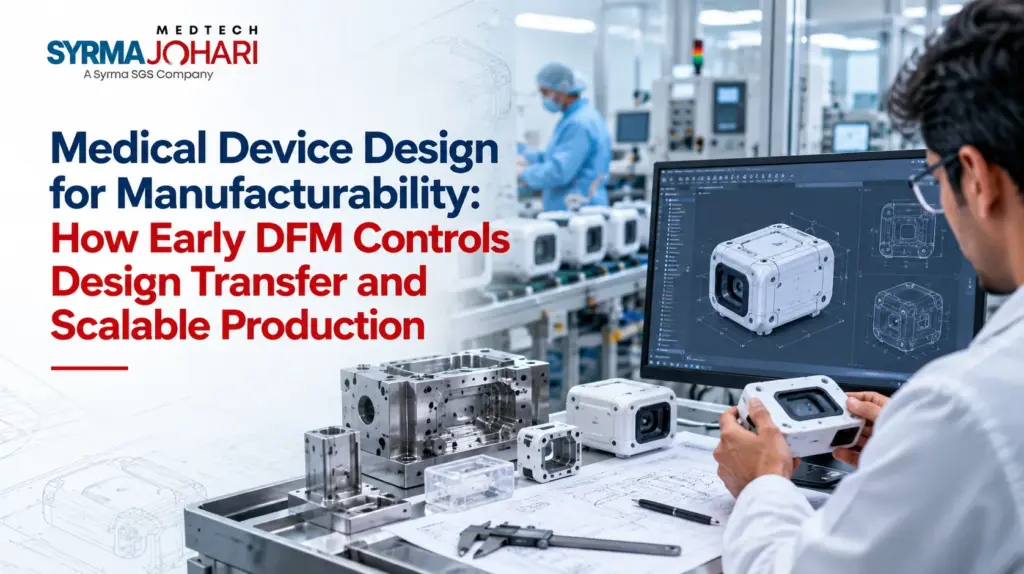
Build manufacturability and supply chain robustness into the medical device development prototyping process, rather than addressing them only at the end. Apply Design for Manufacturability principles during prototyping, not after design freeze.
Common DFM issues revealed during prototyping include:
- Complex assemblies requiring specialized tools or excessive labor
- Over-toleranced parts that inflate cost without improving device performance
- Hard-to-assemble cable harnesses
- Device components with long lead times or single-source risks
Early collaboration with contract manufacturing and tooling teams shapes decisions like part count reduction, commonisation of fasteners and plastics, and test-point placement on PCBs. For example, redesigning a diagnostic cartridge interface to simplify assembly and reduce per-test cost – while maintaining analytical performance – can save significant per-unit cost at scale without affecting patient outcomes.
SJML’s integrated design-engineering and contract manufacturing capabilities help clients move from prototype to stable medical manufacturing with fewer surprises, addressing producibility questions during alpha and beta reviews rather than after tooling is cut.
Prototype Readiness for Clinical Evaluation and Clinical Trials
Engineering prototypes and devices prepared for clinical evaluation differ clearly. The final device intended for a clinical study must meet additional documentation and quality controls that go well beyond what a functional prototype requires. Compliance with regulatory standards is crucial for market approval, and the FDA requires 510(k) clearances for many medical devices – each submission requiring documented evidence of safety and performance.
Regulators and ethics committees typically expect:
- Evidence of bench testing and rigorous testing results
- Risk management documentation (ISO 14971 traceability)
- User manuals and instructions for use
- Prior human factors testing results where applicable
Prototypes are qualified for clinical use through final functional testing, batch records, labeling checks, and verification that they match the design intended for submission. Prototypes must comply with established laws and regulations. Maintaining documentation and traceability is crucial for regulatory compliance in medical device development. Regulatory compliance ensures medical devices meet safety standards; before introducing new medical devices into real-world environments, you must confirm reliability in hospital IT environments, compatibility with sterilization processes, and fit within existing clinical workflows.
SJML supports engineering and test evidence generation that feeds into regulatory submissions, while the client or specialized consultants typically handle the regulatory strategy.
Common Pitfalls in Medical Device Prototype Development – and How to Avoid Them
Four pitfalls consistently delay or derail the medical device development process:
- Underestimating human factors: Skipping usability walkthroughs during early iterations leads to costly redesigns after beta or pilot builds. Run basic workflow simulations at every prototype stage, even informally.
- Neglecting DFM until too late: Designs that work beautifully in the lab can be nightmares to assemble at volume. Involve manufacturing engineers in alpha and beta design reviews to catch issues while changes are still inexpensive.
- Treating prototypes as disposable: Under-documenting early prototypes – materials, test objectives, test results, design rationale – creates gaps in the design history file that are painful to reconstruct during regulatory review. Maintain design history even for early prototypes.
- Failing to align with regulatory expectations early: Misclassifying a device, skipping pre-submission meetings, or ignoring applicable standards (IEC 60601, IEC 62304) leads to major rework after investing significant resources in the wrong direction.
A commercial pitfall worth noting: over-engineering features that are not critical to clinical outcomes or improve patient outcomes adds complexity, cost, and regulatory burden without proportionate clinical value. Cost-effective prototyping means focusing resources on what matters to patient safety and clinical performance.
Adopting a systems-engineering mindset – where hardware, software, usability, and the manufacturing process are considered together from the prototype onward – mitigates most of these risks. Partnering with an experienced MedTech CDMO such as SJML can help structure the product development process to reduce these risks while maintaining development speed.
How Syrma Johari MedTech Supports End-to-End Prototype Development
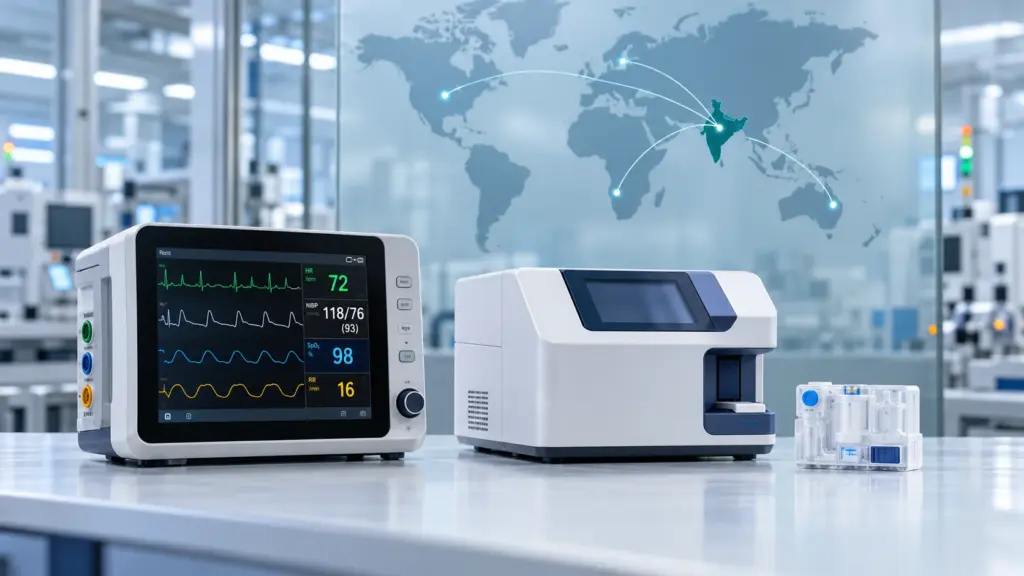
SJML supports clients across every prototype stage: from concept feasibility and system architecture to functional prototyping, verification, and design transfer to manufacturing. This integrated approach is particularly valuable for complex medical devices – electromechanical diagnostic instruments, patient monitoring systems, and connected therapeutic devices – where gaps between R&D, quality, and manufacturing teams are the most common source of delay.
Specific capabilities relevant to medical device prototype development include electronics and PCB design, embedded and firmware engineering (aligned with IEC 62304), mechanical design, precision plastics and injection molding, and prototype and pilot manufacturing. SJML operates under an ISO 13485 quality system and aligns engineering work with standards such as IEC 60601, IEC 62304, and ISO 14971 where applicable.
The result is a product development process where producing prototypes, conducting medical device testing, and preparing for regulatory approval happen within one coordinated program – bridging the gap between the medical industry’s innovation ambitions and the stringent regulatory requirements of the medical technology landscape.
Next Steps: Explore Medical Device Design and Engineering Support
If you are planning a new diagnostic instrument, patient monitoring system, or another medical device, review your prototype strategy early. The decisions made during the initial phase of prototyping – materials, architecture, documentation rigor – echo through every subsequent stage and directly affect your path to regulatory approval and clinical outcomes.
To understand how an integrated product-realization partner can strengthen your development process from concept to clinical-ready device, explore SJML’s capabilities:
Explore our medical device design and engineering capabilities at Syrma Johari MedTech Design & Engineering to discuss your device program with a MedTech expert.
Prepare a brief description of your intended indication, target markets, and current prototype status to make the initial consultation as productive as possible. Building safe, reliable, and commercially viable medical devices starts with disciplined prototype development – and the right engineering partner to see it through.