
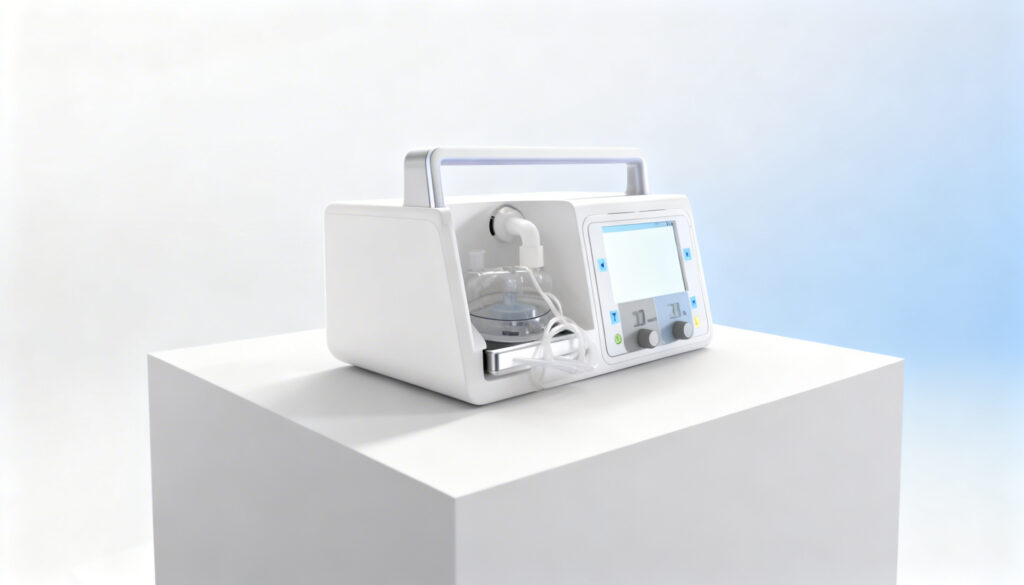
Client Overview
- Geography: USA
- Market Segment: Neonatal Respiratory Care
- Engagement Model: Design, Cost Optimization and Scalable Manufacturing Enablement
Business Objective
A USA based company aimed to develop a cost-effective, reliable, and easy-to-use CPAP device for treating neonatal respiratory distress syndrome (RDS). The objective was to redesign the device architecture to reduce cost and complexity while maintaining clinical performance, safety, and regulatory compliance – enabling scalable manufacturing and broader accessibility across low- and middle-income markets.
Our Approach
Comprehensive BOM Teardown & Cost Driver Analysis
- Detailed BOM teardown to identify high-cost components and system inefficiencies
- Mapped cost drivers across mechanical and electronic subsystems
- Enabled targeted redesign interventions for cost optimization
Design for Manufacturing (DFM) Optimization
Key redesign opportunities identified to balance cost, safety, and performance
Interventions included:
- Standardization of components to reduce variability
- Assembly simplification to minimize production time
- Modular re-engineering for easier field serviceability
- Architecture rationalization to eliminate unnecessary complexity
Industrial & Mechanical Design Optimization
- Optimized device structure to reduce material usage and improve manufacturability
- Enhanced ergonomics for intuitive clinical handling and usability
- Redesigned mechanical architecture to improve accessibility and ease of servicing
Electronics & Electrical Design Optimization
- Replaced high-cost components (PCBs, blowers, LCDs and batteries) with cost-effective alternatives
- Simplified circuitry and reduced overall component count and streamlines electronics architecture
Reliability Engineering
- Implemented MTBF-based simulation to evaluate system reliability
- Conducted lifecycle testing to validate durability under operational conditions
Results & Business Impact
- ~40% BOM cost reduction through systematic redesign
- 30% overall device cost reduction via DFM-led optimization
- Improved reliability validated through MTBF simulation and lifecycle testing