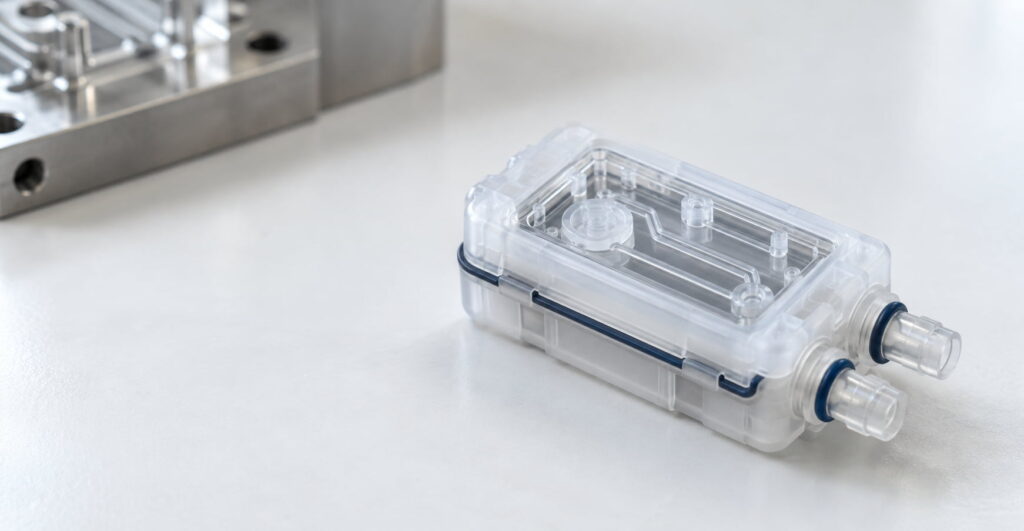
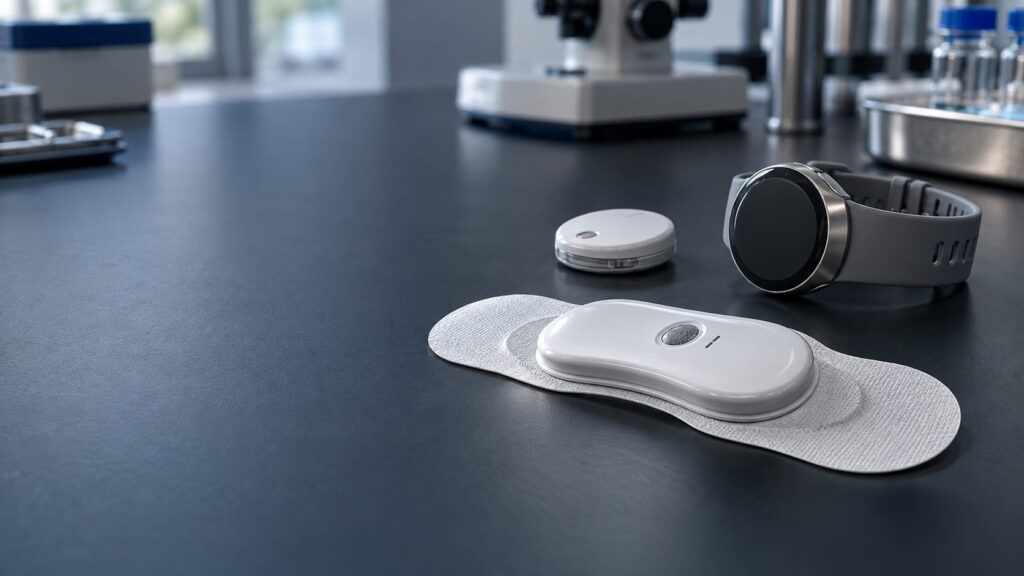
Wearable medical devices have moved well beyond step counting. Today’s systems can continuously capture physiological or behavioral signals, support remote patient monitoring, deliver therapy and generate longitudinal data outside traditional clinical settings. At the same time, not every product that displays a health metric is a medical device. Intended use, claims, risk and evidence determine whether a wearable is a general wellness product or a regulated device.2
For healthcare companies, this distinction matters from the earliest product decisions. Sensor selection, algorithms, battery architecture, skin-contact materials, connectivity, usability, cybersecurity and manufacturing controls all influence whether a wearable can perform reliably over its intended wear period and support market access in the United States or European Union.
What is a wearable medical device
A wearable medical device is a body-worn product intended to monitor, diagnose, prevent or treat a disease or condition, or otherwise perform a medical purpose. It may take the form of a watch, ring, patch, garment, belt, head-worn device or body-worn drug-delivery system. Depending on the architecture, the complete product may include sensors, electronics, embedded software, a mobile application, cloud services and a clinician-facing interface.
A consumer wellness wearable can use similar components but make lower-risk claims related to fitness, sleep habits or general wellbeing. In the United States, FDA’s January 2026 guidance explains that software functions intended only to maintain or encourage a healthy lifestyle, and unrelated to diagnosis or treatment, are not devices under the relevant provision of the Federal Food Drug and Cosmetic Act. A change in claims can therefore change the regulatory pathway even when the hardware remains similar.2
Common types of wearable medical devices
Wearable cardiac monitors
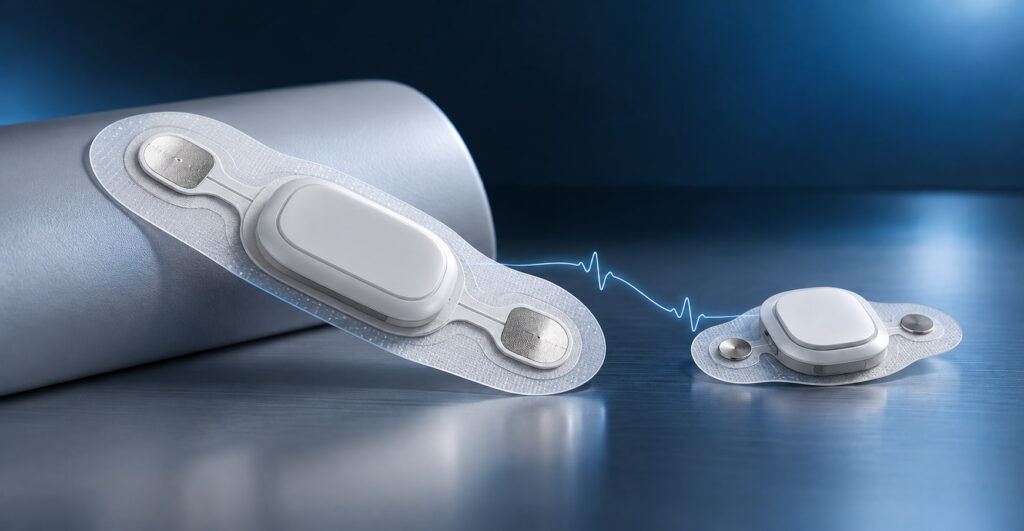
Wearable ECG systems include short-recording devices, chest straps and adhesive patches designed for longer ambulatory monitoring. Depending on the authorized intended use, they may record a single lead or multiple channels, detect or flag rhythm events, and transmit data for clinician review. Product teams must control electrode contact, motion artefact, signal acquisition, event detection, data loss and wear-time performance. Detecting an arrhythmia is not the same as diagnosing a heart attack or demonstrating that monitoring will prevent stroke; clinical claims must match the evidence and authorization.
Continuous glucose monitors
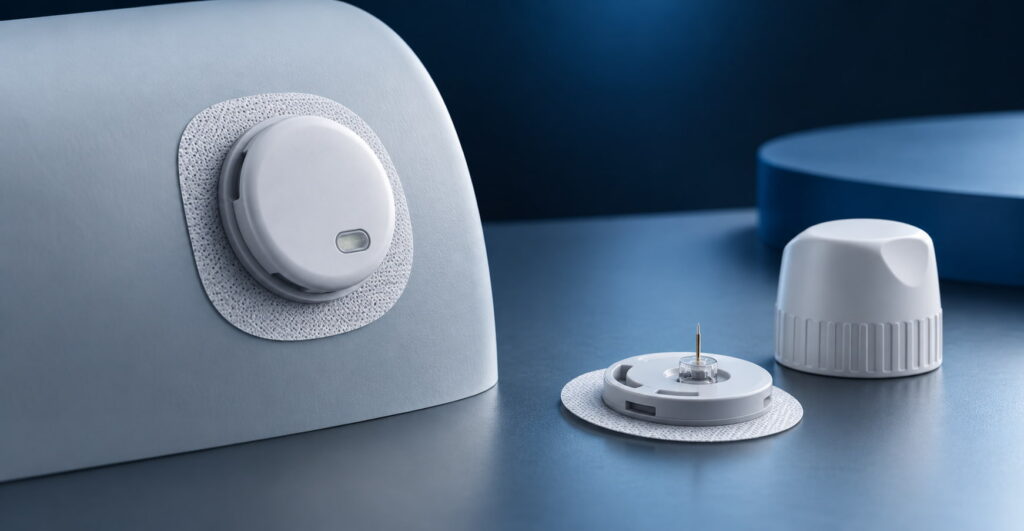
Continuous glucose monitors use a small sensor placed under the skin to measure glucose in interstitial fluid and communicate results to a receiver or app. The category has expanded beyond prescription-only use. In March 2024, FDA cleared the first over-the-counter continuous glucose monitor for adults who do not use insulin, while stating important limitations and advising users not to make medical decisions from the output without consulting a healthcare professional.4
Wearable vital sign and multiparameter patches
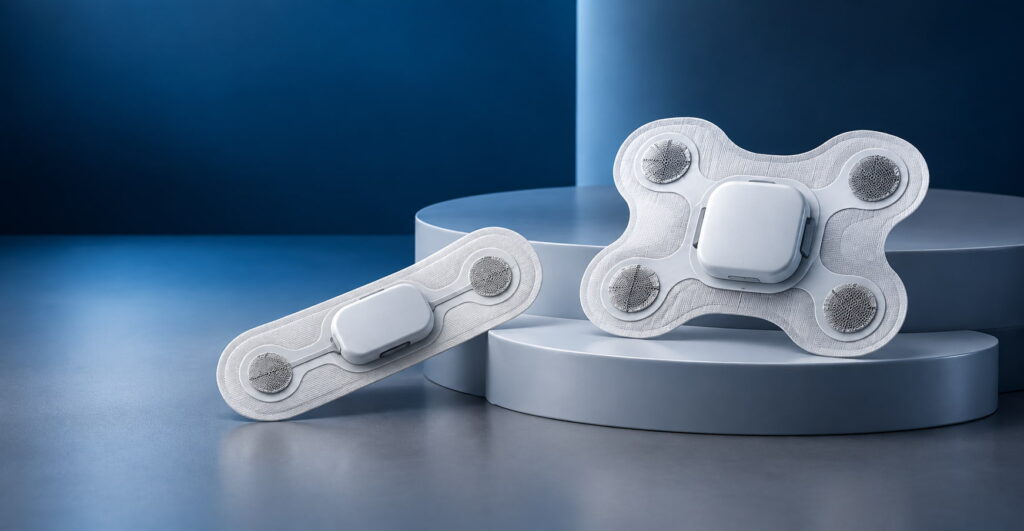
Adhesive or strap-based patches can combine temperature, heart rate, respiration, oxygen saturation, motion or other signals for home monitoring, post-acute care and decentralized studies. Their value depends on more than adding sensors. Developers must define which measurements are clinically meaningful, how artefacts are rejected, when alerts are generated and how information reaches the responsible user without creating unmanageable alarm burden.
Smartwatches fitness bands and smart rings
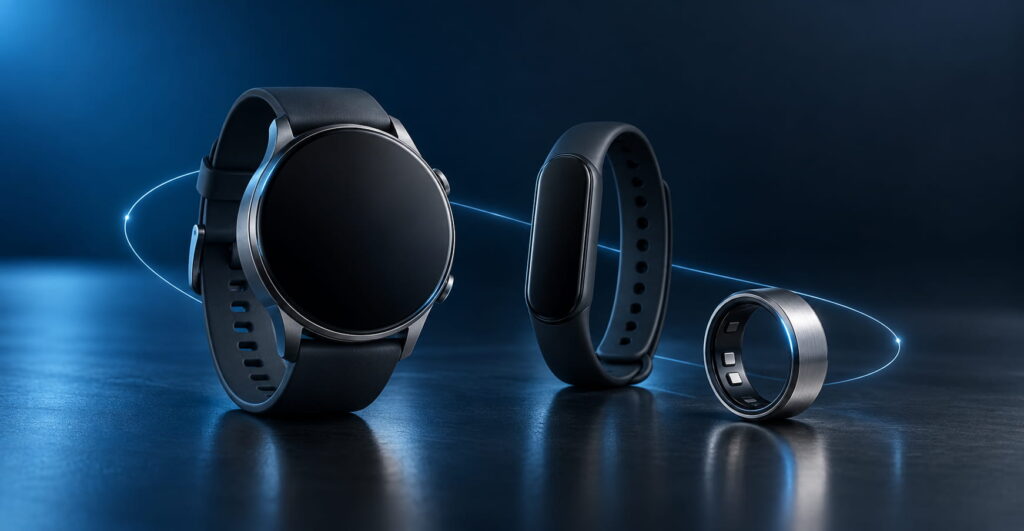
Watches, bands and rings can capture activity, pulse, temperature trends, sleep-related signals and, in some products, an ECG or other regulated function. These form factors are attractive for long-term use because they are familiar and relatively unobtrusive. However, regulatory status applies to particular functions and claims, not to the entire product category. A device can contain both wellness features and an authorized medical function.
Movement rehabilitation and neurological wearables
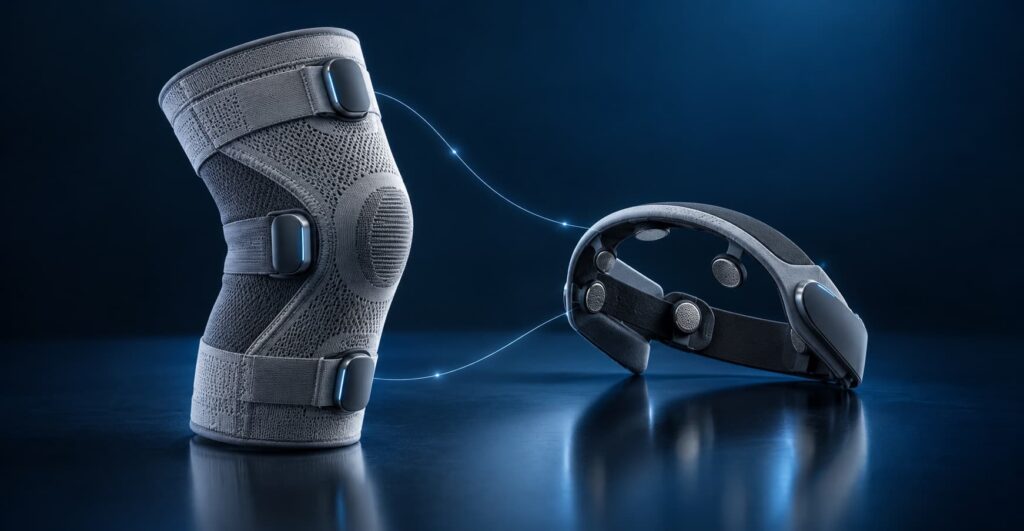
Inertial sensors, pressure sensors, electromyography and other technologies can support gait analysis, posture assessment, rehabilitation adherence, tremor monitoring or neuromuscular therapy. For these products, placement repeatability, calibration, patient ability, feedback design and use in uncontrolled home environments can materially affect performance.
Wearable drug delivery and therapeutic systems
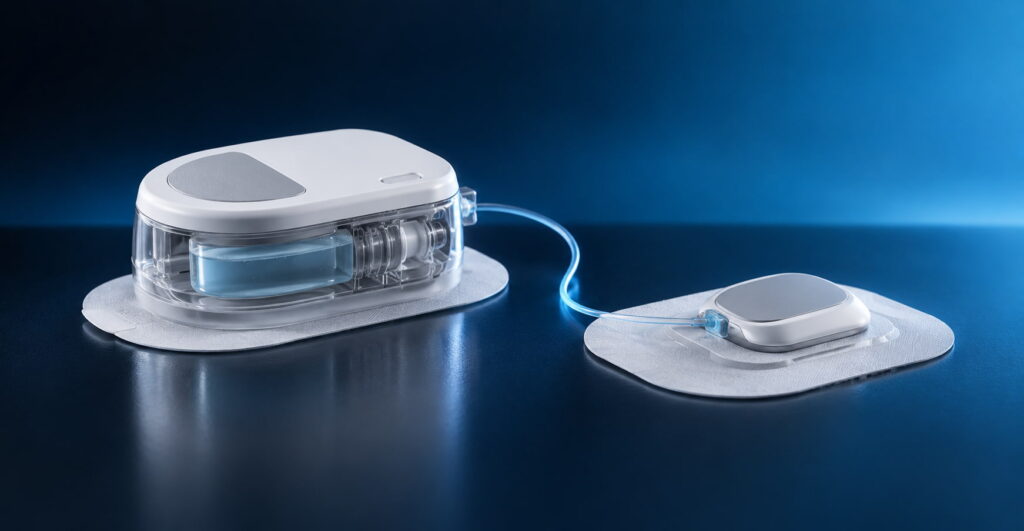
Wearables are not limited to sensing. Insulin pumps, on-body injectors, electrotherapy devices and other body-worn systems can deliver medication or energy. These products introduce additional hazards associated with dose accuracy, flow interruption, occlusion, electrical output, attachment, alarms and fail-safe behavior. Their development typically requires closer integration of mechanical, electronic, software, human-factors and risk-management work.
Smart textiles and emerging skin conformal sensors
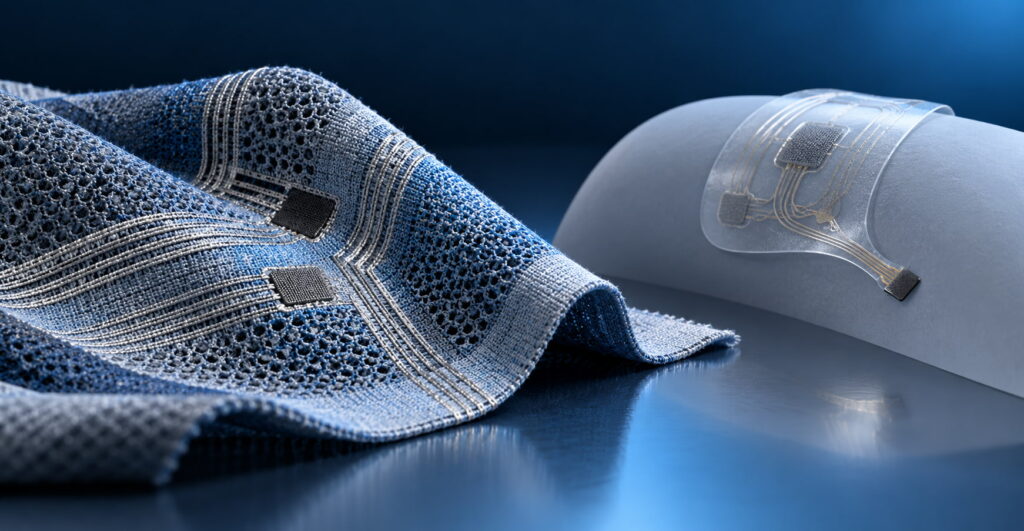
Sensor-enabled garments and skin-conformal electronics are being investigated for motion, respiratory, cardiac, sweat and biochemical measurements. Some concepts are progressing toward practical use, but research prototypes should not be presented as established medical products. Washability, calibration, material durability, power, scalable assembly and repeatable placement remain important translation challenges.
How wearable devices are changing healthcare
The main change is temporal: wearables can capture repeated observations during daily life rather than a single measurement during a clinic visit. This creates opportunities to observe trends, symptoms, adherence and recovery in a more representative environment. Wearable and home sensors are also used in remote patient monitoring and clinical research, where they can support decentralized data collection.
Continuous data does not automatically produce better care. A 2024 systematic review of remote patient monitoring found a downward trend in hospital admission or readmission risk, length of stay and several cost-related measures, while noting that results varied across interventions and outcomes. Clinical benefit depends on a complete service model: validated devices, reliable connectivity, defined thresholds, trained reviewers, escalation protocols and patient engagement.7
What OEMs should evaluate before developing a wearable medical device
Define intended use before selecting technology
The intended population, user, use environment, measurement purpose and clinical action should be defined before the team freezes sensors or form factor. A wellness insight, screening notification, diagnostic measurement and therapy-control signal carry different evidence and risk implications. Early classification and regulatory-pathway work reduces the chance that late claim changes force redesign or additional studies.
Build an evidence strategy around each claim
Analytical accuracy alone may not establish clinical usefulness. Development teams should define reference methods, acceptance criteria, study populations, wear conditions and failure modes for each claimed output. Validation should account for motion, ambient light, temperature, perfusion, anatomical differences, placement and other factors that can affect real-world performance.
Representative testing is particularly important for optical sensing. Evidence has shown that pulse-oximetry performance can differ across skin pigmentation. FDA’s 2025 draft recommendations for medical-purpose pulse oximeters called for larger, more diverse clinical studies and objective assessment of skin pigmentation. The lesson extends beyond one measurement: inclusive performance must be designed and verified, not assumed.8,9
Engineer for the full wear period
A device that performs well on the bench may fail during prolonged wear. Product requirements should address comfort, heat, sweat, movement, adhesive lift, water exposure, charging, cleaning, donning and doffing, and the consequences of incorrect placement. Skin-contact materials and adhesives require a biological-risk evaluation appropriate to contact type and duration. Human-factors work should include intended users and realistic home or mobile environments.
Treat power connectivity and data integrity as one system
Battery capacity, sampling rate, wireless duty cycle, on-device processing and data-transmission frequency are interdependent. Higher sampling can improve signal resolution but shorten operating time and increase storage and processing needs. The architecture should define what happens when the phone is absent, connectivity drops, memory fills, time stamps drift or a battery reaches a low state. Data provenance and synchronization are essential when clinicians or algorithms interpret trends across time.
Design cybersecurity into the product lifecycle
Connected wearables can expose patient information and safety-critical functions to cyber threats. FDA’s February 2026 final guidance addresses cybersecurity design, labeling and recommended premarket documentation for devices with cybersecurity risk and supersedes the June 2025 version. Threat modeling, secure update mechanisms, authentication, vulnerability management, a software bill of materials where applicable and coordinated post-market response should be planned as lifecycle activities rather than submission-stage paperwork.3
Plan interoperability and clinical workflow
A technically accurate wearable can still fail commercially if its data is difficult to interpret or cannot enter the intended care pathway. Teams should define who receives data, how often it is reviewed, which events require action, how false alerts are managed and how the system connects with mobile platforms, cloud services or health-information systems. In the EU, the European Health Data Space regulation entered into force in March 2025 and establishes a phased framework for electronic health-data access and use, reinforcing the direction toward structured interoperability and user control even though many obligations apply later.10
Prepare for design transfer and scalable production
Miniaturized wearable assemblies can be sensitive to tolerance stack-up, sensor alignment, optical windows, electrode placement, sealing, adhesive lamination, battery handling and RF performance. Design for manufacturability should begin during architecture and prototype work. Production planning should cover supplier qualification, incoming controls, calibrated fixtures, in-process tests, firmware loading, final functional test, serialization, packaging, process validation and traceability.
US and EU regulatory considerations
In the United States, a wearable’s regulatory status and pathway depend on intended use, technological characteristics and risk. A general wellness product may fall outside FDA device regulation, while a diagnostic or therapeutic function may require a premarket submission and compliance with applicable quality-system, labeling, clinical, software and post-market requirements. FDA’s updated wellness and cybersecurity guidance make claim discipline and connected-device lifecycle planning especially important in 2026.2,3
In the European Union, the Medical Device Regulation applies when the product meets the medical-device definition. Classification, conformity assessment, clinical evaluation, risk management, technical documentation, software qualification, post-market surveillance and vigilance must be considered for the specific device and intended purpose. MDCG guidance includes documents on software qualification and classification and cybersecurity, but guidance should be applied together with the MDR and product-specific requirements.5,6
For both markets, standards should be selected from the device architecture and risk profile. Commonly relevant frameworks can include ISO 13485 for quality management, ISO 14971 for risk management, IEC 62304 for medical-device software, IEC 62366-1 for usability engineering, the ISO 10993 series for biological evaluation, IEC 60601 standards where applicable, and IEC 81001-5-1 for health-software and health-IT security activities. Applicability must be assessed; a generic standards list is not a regulatory strategy.
Why an integrated development and manufacturing partner matters
Wearable programs often cross organizational boundaries: industrial design, electronics, embedded software, mechanical engineering, mobile and cloud software, clinical evidence, regulatory documentation, tooling, supplier quality and manufacturing engineering. When these streams are managed independently, late changes in enclosure geometry, adhesive selection, sensor placement or firmware can create repeated verification work and delay transfer.
Syrma Johari MedTech supports electromechanical medical-device development from concept and system architecture through prototyping, verification and design transfer. Its published experience includes a long-duration wearable ECG device, a Bluetooth-enabled wearable lung-fluid monitoring device and connected multiparameter monitoring systems. SJML also provides regulatory and quality support across FDA and EU MDR pathways, software lifecycle, cybersecurity, clinical documentation and post-market activities.11,12,13
For OEMs, the practical value is continuity: product requirements can be translated into an architecture that is testable, manufacturable and supported by the documentation needed for regulated markets.
Frequently asked questions
Are all fitness trackers medical devices
No. Regulatory status depends on intended use and claims. A low-risk product intended only to encourage a healthy lifestyle may be treated differently from a function intended to diagnose, monitor or treat a disease.
What is the difference between a wearable health device and a wearable medical device
Wearable health device is a broad descriptive term that can include wellness products. A wearable medical device has a medical intended purpose and is subject to the applicable regulatory framework for its market.
Can a smartwatch diagnose a medical condition
Only an authorized function should be described according to its cleared or approved intended use. A smartwatch may record a signal or provide a notification without replacing clinical diagnosis.
What are the main types of wearable medical devices
Common categories include cardiac monitors, continuous glucose monitors, vital-sign patches, regulated functions within watches or rings, rehabilitation and movement wearables, and wearable drug-delivery or therapeutic systems.
What makes wearable medical-device development difficult
The main challenges are obtaining reliable signals during daily activity, maintaining comfort and skin integrity, managing power and connectivity, validating algorithms across representative users, protecting data, meeting regulatory requirements and transferring a compact design into repeatable production.
When should an OEM involve a manufacturing partner
Manufacturing and supplier input should begin during feasibility and architecture. Early design-for-manufacturability work is especially important when sensor alignment, adhesives, sealing, batteries, miniaturized assemblies or automated test fixtures affect performance.
Develop your wearable medical device with SJML
Whether the program is at concept, prototype, verification or transfer stage, SJML can support the engineering, regulatory and manufacturing work needed to move a connected wearable toward compliant production. Discuss your intended use, target markets, sensing architecture and scale-up priorities with our team.